
We’re based in the North East of England, and one of the biggest local employers here is Nissan. One of Nissan’s core philosophies is Kaizen. Kaizen is all about continual review and reflection – hundreds of incremental changes that add up to big improvements over time.
You probably run your ecommerce business in the same way. Incrementally improving everything you do day by day. Adding more products. Tweaking your Google Ad campaigns. But this approach can only take you so far, and it can be difficult pinpoint why your sales aren’t increasing.
Periodically, you need to take a big step towards change and find a new, more effective way of doing things. And sometimes you need external support to help you see the bigger picture and drive your business forward.
While there may be no single reason your online store isn’t selling, there are several things you need to check and investigate if you’re going to improve conversion. Here are a few reasons your ecommerce sales might not be growing.
Poor user experience
Slow load times. Confusing navigation. Complicated checkout processes. These are all huge red flags to potential customers that will cause them to abandon your site in a matter of seconds. While website development can be costly, a poor user experience will cost you far more in the long run. Conduct regular UX audits, simplify navigation, and ensure your site is mobile responsive and allow customers to check out quickly and conveniently.
Weak product pages
Product pages are arguably the most important pages on your website. This is where your website users will (or won’t) convert. A major factor in driving traffic, sales and revenue, you really can’t afford to neglect PDPs. So with that being said, what makes a high-performing product page?
Descriptive product copy
No matter how great you think your product is, your customers won’t know this if you don’t make the benefits clear. Generic copy just won’t cut it. Your product pages need to sell, not just display.
Imagery and video
High-quality product images and videos are essential. A mix of ecommerce and lifestyle shots is also recommended to give potential customers the full picture.
Size guides
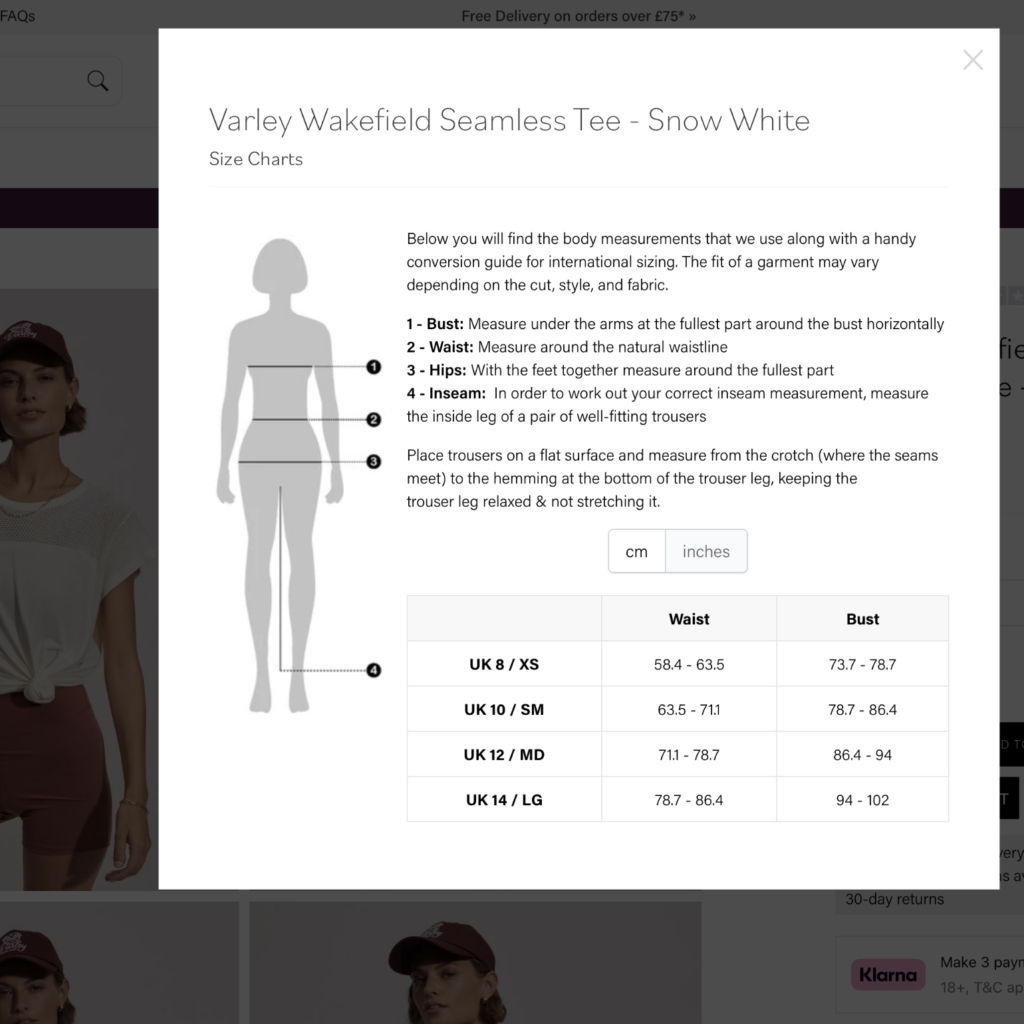
Where appropriate, size guides can boost the chances of conversion and also lower returns. Integrating size guides into your product display pages makes the information easy to find – no one wants to hunt around your website.
Reviews and social proof
With so many products and brands to choose from, social proof has become a powerful tool for driving sales. Ecommerce platforms like Shopify can easily integrate with popular review platforms, or offer the capability to leave reviews directly within product pages. Seeing positive reviews can convince customers who are on the fence, as can user-generated content showing the product in the hands of real people.
No customer retention strategy
Many businesses fall into the trap of fixating on new customer acquisition. And while attracting new customers is important, it shouldn’t come at the cost of retaining the ones you already have. It’s generally much easier to convert a customer who has already purchased from you, as these are the people you can nurture a relationship with to boost repeat sales and customer loyalty. Email marketing is the perfect channel to build these relationships, allowing you to be highly targeted and speak directly to the people most likely to convert.
Doing everything manually
Many ecommerce businesses make the routine of performing every single task manually. While this may be necessary in the early days of launching a new online store, failing to utilise automations will hinder your growth in the long term. These days, there are so many tools, many of which are compatible with popular ecommerce platforms, that can automate processes like bulk product uploads, inventory management, fulfilment and returns. These tasks take up a lot of time and energy, which could be spent growing the business and driving more sales.
Attracting the wrong crowd
Traffic with no sales can often be the result of poor or lack of targeting. If you’re attracting people who simply have no interest in your products, you aren’t going to see sales rolling in. In this scenario you need to refine your paid marketing strategy to attract more relevant, purchase-ready visitors.
Begin by pinpointing your ideal audience, then tap into advanced targeting tools such as lookalike segments and in-market audiences.
Develop ad copy that addresses your audience’s specific needs, pairing it with striking visuals and clear calls-to-action to capture attention. You can also inspire customers to share their own content featuring your products – and, with their consent, repurpose this user-generated content to enrich your ads.
Poor search engine optimisation
Similar to the point above, failing to implement a proper SEO strategy can attract the wrong users, meaning your site may not meet user expectations.
Ecommerce brands should generally focus on transactional keywords that signal buying intent. The more specific, the better, as these search terms will drive highly targeted traffic, meaning you’re reaching the people who are actively looking to buy your products.
Stuck in a rut and need an outside perspective? Our team is made up of ecommerce experts with firsthand experience of growing businesses like yours. Get in touch and we’ll pinpoint exactly where you’re going wrong.
