The average basket abandonment rate is over 70%.
While abandoned shopping baskets are inevitable when running an ecommerce business, many merchants have turned to automated emails over the past decade to convert shoppers who never quite made it to the checkout.
In this post, we explain what email automation and remarketing actually mean, and how they can ultimately increase revenue when implemented correctly.
What is email marketing automation?
In short, email marketing automation refers to the process of setting up automatic emails to trigger when subscribers take certain actions. But automation is about more than just saving time and energy. When strategically executed, automated emails can be used to deliver personalised messaging, and to ensure your content reaches the right people at the right time, boosting the likelihood of a conversion taking place.
Why email automation is important
In simple terms, email automation is important because it helps to increase conversion rate and revenue. It reminds website visitors of products or services, and keeps your brand on their mind.
Chances are, the majority of people who land on your website each day won’t make a purchase, which could be down to any number of reasons. Whilst we can’t read their minds, we can make some educated guesses around the issues/thought processes that lead to basket abandonment. Indecision, price, additional costs such as shipping, or a desired product being out of stock can all lead to lost sales. But automation and remarketing can recoup some of these lost sales.
Examples of email automation
Welcome emails
if you opt in to receive marketing communications via email, chances are you’ll receive a welcome email soon after. Welcome emails provide an opportunity to connect with customers, communicate your brand values and offer an incentive to make their first purchase, whether this be a discount code or other limited time offer.
Birthday emails
If customers are required to fill out their birthday when creating an account, you can send birthday emails to offer a more personal touch and drop a special discount or offer into their inbox to encourage a purchase.
Surveys/feedback
Surveys are a great way to gain insight into how your customers feel about your website and company as a whole. When someone makes a purchase, why not include a survey link in the confirmation email to find out how they found the process?
Product/collection launches
If you’ve recently or are about to launch a brand new product, campaign or collection, you want your customers to hear about it. Those already familiar with your brand are probably more likely to be interested in new products than those who’ve never heard of you, so sending out an update to your email subscribers could very well be the difference between a successful and unsuccessful launch.
Remarketing emails
Remarketing emails are used to try to increase conversions by re-engaging with customers who have come close to making a purchase but not followed through, for example, those who have added to cart but abandoned their basket for whatever reason. This is the type of automation email we will focus on in this post.
What is email remarketing?
Email marketing refers to the act of re-engaging customers who have visited a particular website or shown interest in a product, but have not made a purchase.
Put plainly, it’s an email marketing strategy that aims to re-attract website visitors or customers.
What is the difference between remarketing and retargeting?
Although the terms are often used interchangeably, remarketing and retargeting actually refer to different aspects of digital marketing. But they do work towards the same goal.
Retargeting refers to the paid display ads that are served to a user who has viewed a website or social media page through the Google Display Network and Facebook. This type of ad can be shown on a range of websites. The aim is to convert those who have not yet made a purchase, essentially trying to tempt them back to seal the deal.
Remarketing generally uses email to target those who have already made a purchase or done business with your brand – its aim is to retain existing customers.
How effective is email remarketing?
It’s thought that a customer needs to hear your message at least seven times before they make up their mind about purchasing something from your brand. Remarketing helps build much-needed exposure and visibility with those already aware of (or interested) in your products and services. According to Mailchimp, you can see an average of 34 times more orders per recipient with an automated email series than with bulk email alone.
Examples of email automation & remarketing
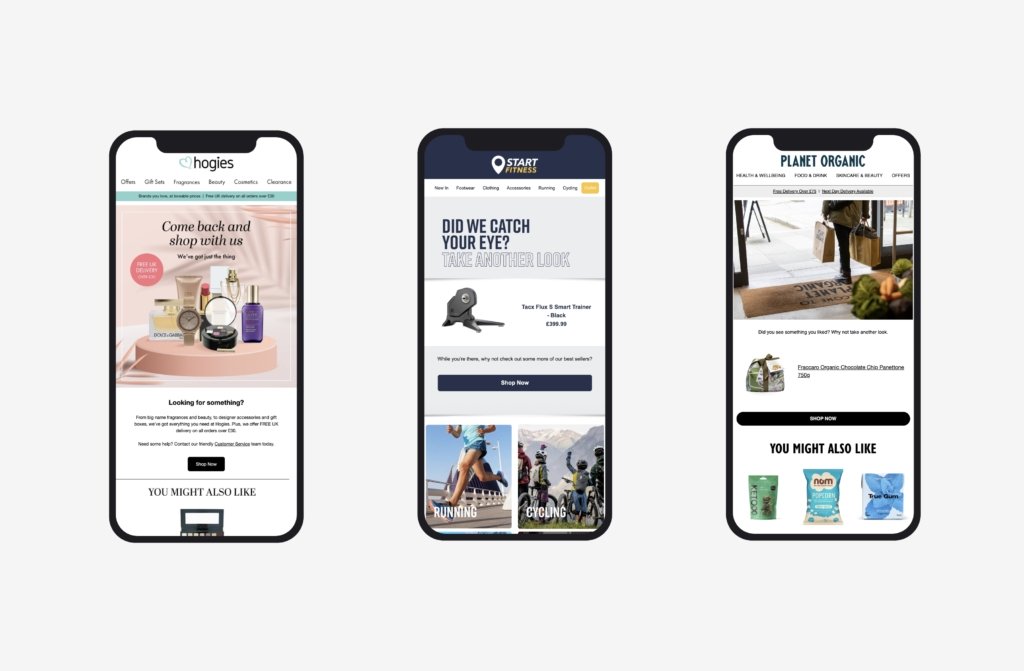
Above you can see three examples of remarketing emails for our clients in the beauty, sports and grocery sectors. These are automated emails that trigger when a customer browses the website but does not make a purchase. While the premise and goal of each email is the same, the execution differs slightly, with some incorporating specific products, others showing products similar to those previously purchased by the recipient. Email A/B testing can give you valuable insights into the layout and structure delivers the best results for your business.
Looking to increase revenue and get better results from your email campaigns? We can help. Get in touch or take a look at our email marketing services to get a feel for what we do.
