Search is changing, and fast. With the rise of AI Overviews, featured snippets and instant answers, more users are getting the information they need directly on the search results page. This trend, known as zero-click search, means fewer clicks to websites and more competition for attention within the SERPs.
So, where does this leave your brand? For starters, it raises an important question: how can you stay visible and drive organic growth when Google and AI-driven tools are providing answers upfront?
Let’s break down what’s happening and how you can adapt your SEO strategy to continue driving organic traffic to your website.
What is a zero-click search?
A zero-click search is when a user finds the answer to their query directly on the search engine results page (SERP) without needing to click through to a website. Nearly 60% of Google searches ended without a click in 2024.
This happens because Google and other search engines increasingly display information in features like featured snippets, knowledge panels, maps, instant answers, and most recently, AI Overviews. While convenient for users, these features reduce the number of visits to websites, making visibility within these SERP features a critical part of SEO strategy in 2025 and beyond.
The impact of AI Overviews on SEO
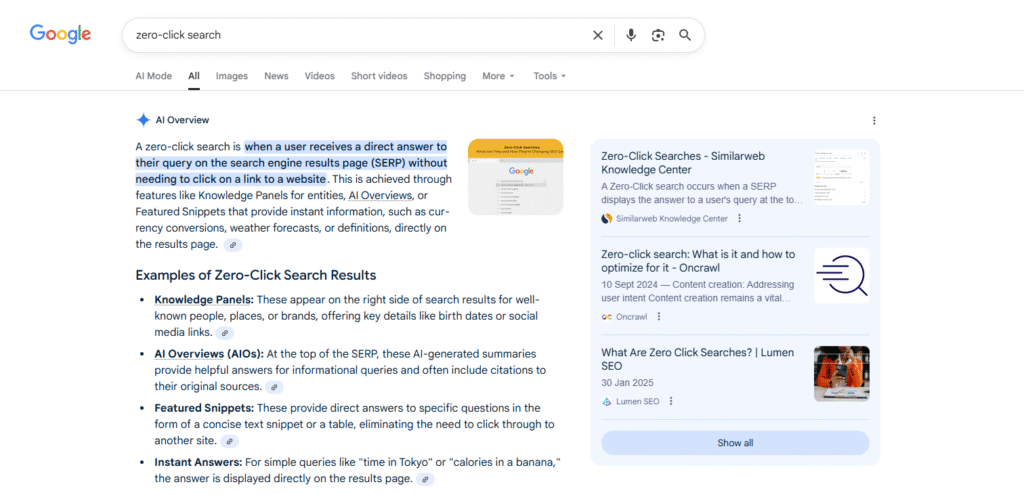
AI Overviews (previously SGEs on Google) are AI-powered summaries that provide direct answers, usually pulling insights from multiple websites. You’ve likely come across them as they appear right at the top of the search engine results page.
While AI Overviews reduce clicks, they also open up new opportunities for visibility if your content is included. Traditional SEO strategies that focus purely on ranking in the “10 blue links” are no longer enough. To thrive, brands need to do three things:
- Optimise for visibility within the SERP itself – not just for website traffic
- Create content that AI models and algorithms prefer to surface – clear, well-structured, and authoritative
- Balance search presence with owned channels like email, social and community to capture attention beyond search
How this works in practice:
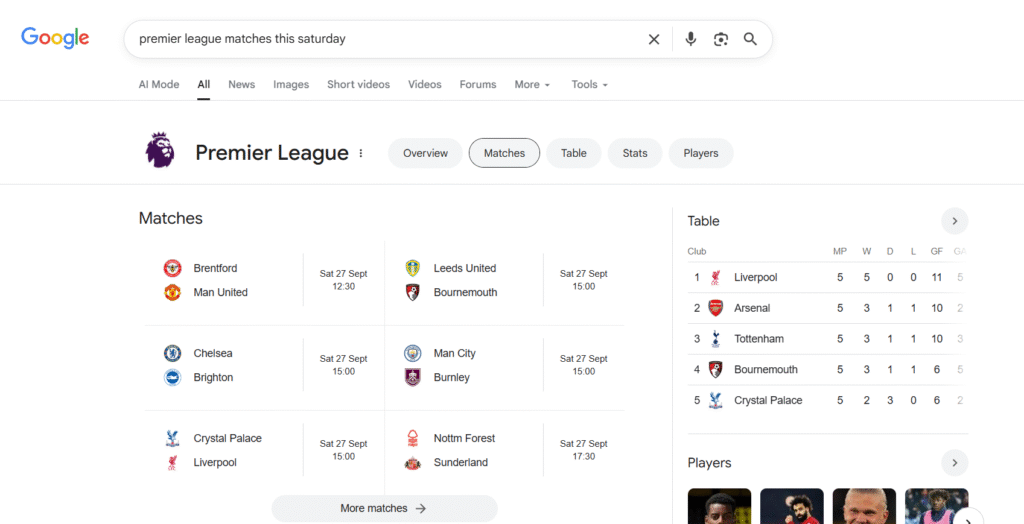
> Someone Googles “Premier League matches this Saturday”
> The timetable is immediately shown at the top of the page
> User gets the dates and times they were looking for and ends the search
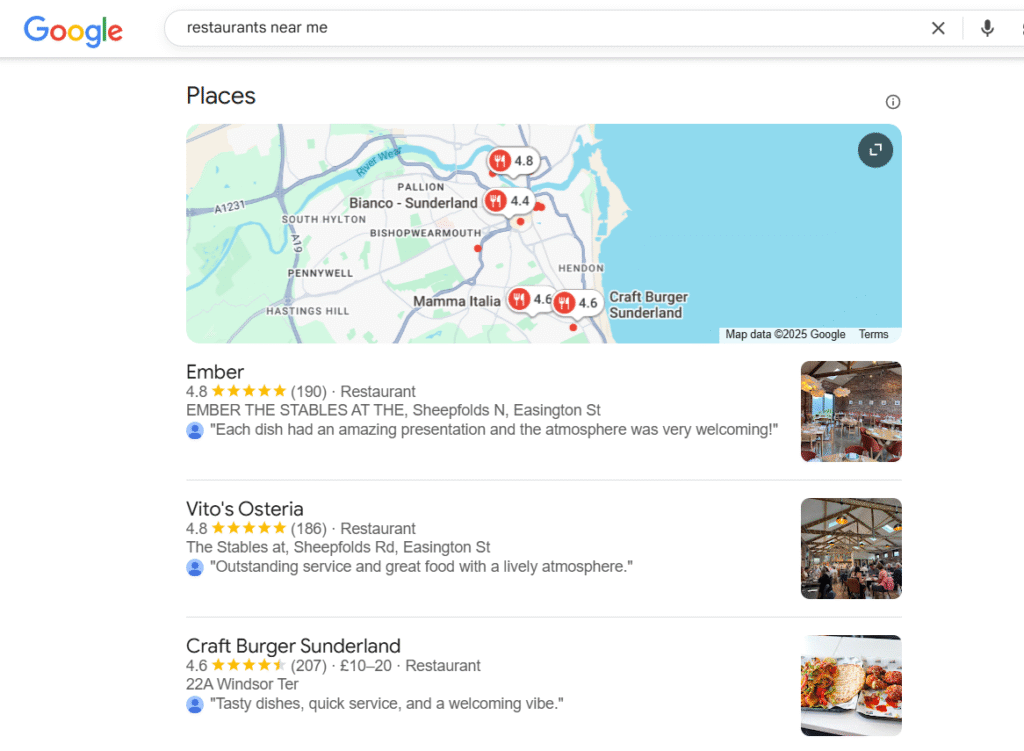
> User searches “restaurants near me”
> Google displays business information directly with star ratings and addresses
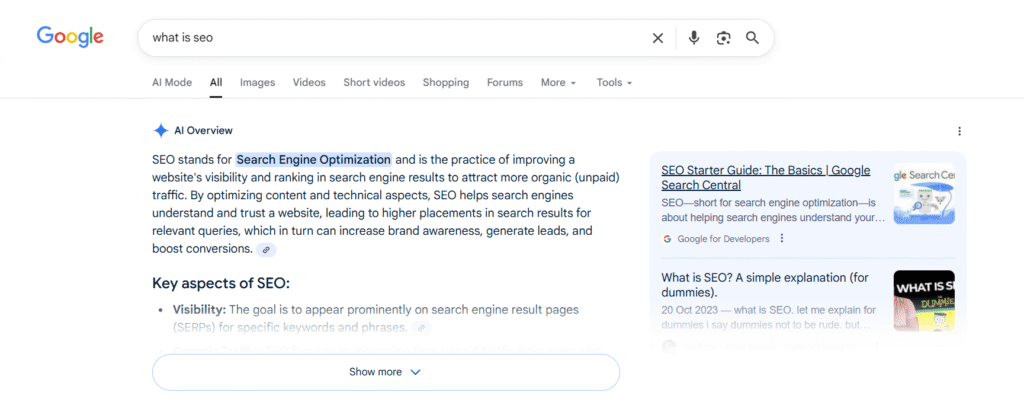
> User searches “What is SEO?”
> Google displays the answer in the results
> User gets the information they need
> Said user doesn’t click on any results and bypasses your site
Addressing the rise of zero-click search: how to adapt your SEO strategy
Target featured snippets and AI Overviews
Use concise definitions, lists and FAQs to make your content snippet-ready. Pages should be structured with clear headings, schema markup and bullet points so AI tools can extract key info.
Monitor AI Overview results to see which queries surface your competitors, and aim to claim that space.
Build topical authority
You need to go further than targeting single keywords. Create clusters of content that cover entire topics comprehensively. Remember, it’s all about E-E-A-T (Experience, Expertise, Authoritativeness, Trustworthiness) signals. Authority can be demonstrated through author bios, external mentions and credible sourcing.
Prioritise unique value
AI Overviews can summarise generic information, but they can’t replicate first-party data, case studies or original insights. Invest in content that provides something new, whether it be research, data or expert commentary. Try to showcase your brand’s unique perspective – AI can summarise facts, but only you can tell your story.
Optimise for branded search and trust signals
As zero-click search grows, brand recognition becomes critical. If people trust you, they’ll seek you out directly. Strengthen your presence across review sites, social platforms and knowledge panels so your brand is discoverable everywhere.
Improve metadata
Metadata plays a big role in getting users to click through to your website, so to give your brand the best chance of winning organic traffic, you need to pay attention to the quality of your meta titles and descriptions. Ensure they are within the recommended character limits, avoid keyword stuffing and think about what will make your site stand out against the other results. For example, are you an expert in your field or an award-winning organisation? Do you offer free shipping or discounts if customer spend a certain amount?
Use multimedia content
Google is increasingly surfacing videos, images and podcasts in the SERPs, which generally stand out more on the page. Try repurposing written content into short videos or infographics to increase visibility. YouTube videos often rank prominently in both search and AI-generated overviews, so make sure you optimise your channel if you have one.
Utilise FAQs
AI Overviews are designed to answer user queries directly. Taking the most commonly asked questions among your target audience is a great way to create unique content that brings value to the user, while increasing the chances of your content being featured in an AI Overview or the ‘People Also Ask’ section of Google.
Measure beyond clicks
Yes, we all want clicks because clicks = traffic, but there are other metrics worth paying attention to as well. Track impressions, brand mentions and engagement in the SERPs to get a more rounded view of the success of your SEO activity. You can use tools like Google Search Console Ahrefs and SEMrush to monitor how often your content appears in search features. Consider adapting your reporting to highlight visibility impact, not only traffic numbers.
Want help future-proofing your SEO strategy for AI-driven search? Our SEO team specialises in building visibility where it matters most – send us a message to get started.
