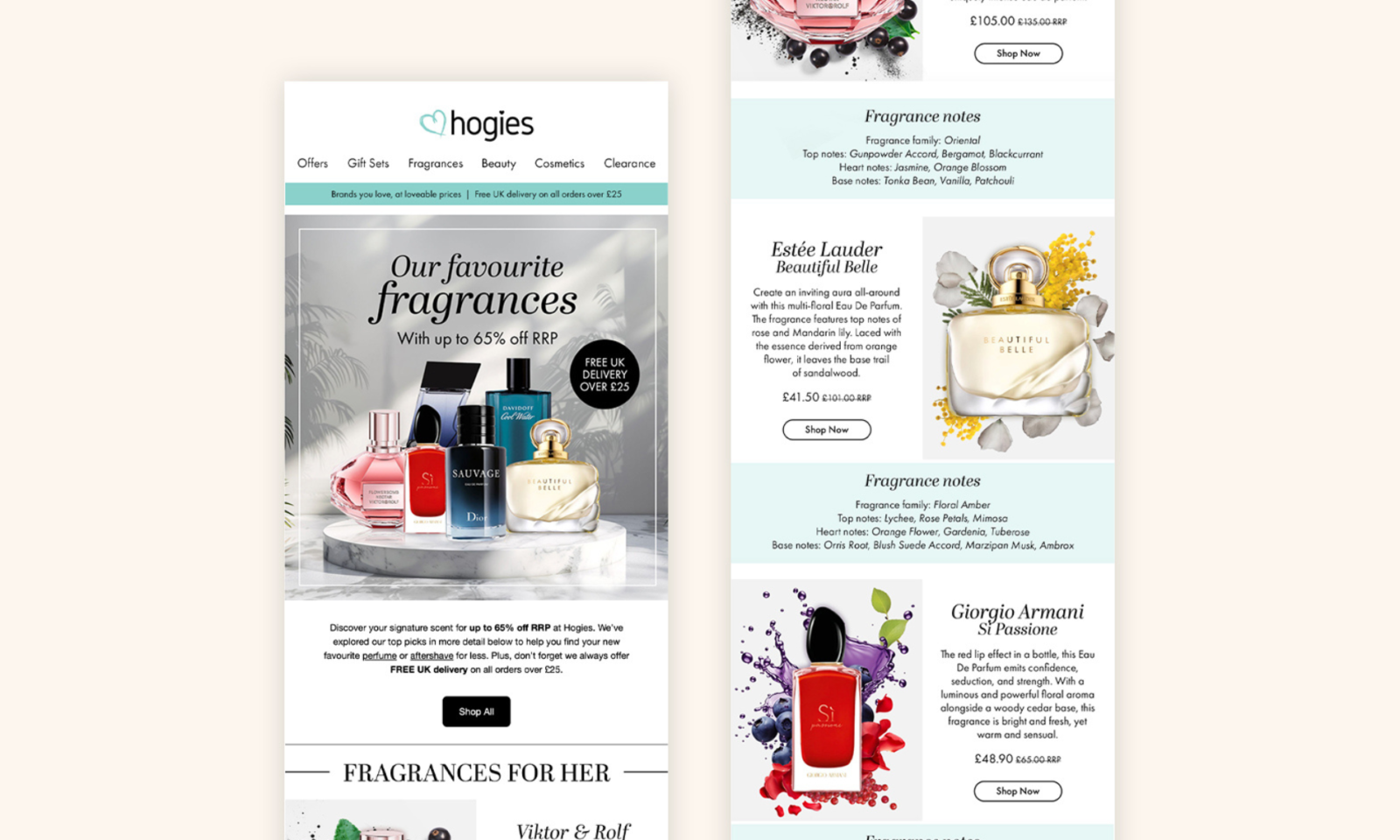
The health and beauty sector is highly competitive, but with high levels of brand loyalty, there are still plenty of opportunities for brands to foster repeat business. Email marketing is one of the most effective ways to engage consumers within this industry, especially for keeping customers engaged between purchases and encouraging them to come back. But with inboxes becoming increasingly crowded, sending more emails isn’t always the answer – it’s all about relevance, timing, and personalisation.
So, what does good email performance actually look like for a health and beauty brand in 2026?
In this blog, we’ll review the latest email marketing benchmark data for the health and beauty industry provided by the Klaviyo 2026 benchmark report, covering key metrics including open rates, click rates and placed order rates. We’ll also look at the role of automation, personalisation and lifecycle marketing, and how a more targeted email strategy can help brands build stronger customer relationships and encourage repeat purchases.
What are the latest email marketing benchmarks for health & beauty brands?
Comparing your email marketing performance with other brands can help identify where there’s room to improve. Use benchmarks as a guide rather than a fixed target, as your performance can vary depending on factors such as audience, product range, customer behaviour and email strategy.
Looking at Klaviyo’s latest 2026 benchmark data, health and beauty brands achieved an average 31% open rate for email campaigns, with the average open rate for automated flows being 32.2%. When it comes to click rates and placed order rates, though, the differences between campaigns and automation become clearer.
Open rate
Average campaign open rate: 31%
Average flow open rate: 32.2%
Click rate
Average campaign click rate: 1.6%
Average flow click rate: 5.5%
Placed order rate
Average campaign placed order rate: 0.2%
Average flow placed order rate: 2.1%
These figures provide a useful benchmark for health and beauty ecommerce brands as they highlight an important distinction between one-off campaigns and automated emails. Campaigns are typically sent to a wider audience at a specific point in time, while automated flows are triggered by individual customer actions or stages in the buying journey.
These figures shouldn’t be treated as isolated targets, as your results will depend on many factors, including the size and quality of your database, the products you’re selling, how frequently you send emails and how well your content matches your audience. Below, we will dive deeper into why email automations can be particularly useful for brands in this sector.
Why do email automations matter for health & beauty brands?
Automated emails are particularly valuable for health and beauty brands, as they can grab the attention of customers who have just signed up, browsed a particular product, abandoned their basket or completed a purchase. An email triggered by behaviour that shows interest can therefore be more relevant than a general campaign.
Klaviyo’s 2026 data shows that automated flows generate more than three times the click rate of campaigns and around 13 times the placed order rate. These figures highlight the value of a strong lifecycle strategy where automated emails support customers at different stages of their journey and can create more opportunities to drive engagement and repeat purchases. Below are a few of the key reasons email automations can make a big difference in customer engagement.
Build more personalised customer journeys
One of the biggest benefits of email automations for health and beauty brands is that they provide more opportunities to personalise the customer experience. Previous purchases, browsing behaviour, product preferences and engagement can all help determine which emails a customer receives.
For example, a customer interested in skincare doesn’t necessarily need to receive the same content as someone who regularly buys haircare, so creating different automation journeys based on customer behaviour can make email communications feel more useful and relevant, helping brands build stronger relationships beyond the initial purchase.
Encourage repeat purchases
With health and beauty products being used regularly, their need to be replaced gives brands a natural opportunity to encourage customers to return. Replenishment emails can remind customers when they may be running low, based on their previous purchase or typical buying cycle.
This can be really useful for skincare, haircare and personal care, where customers tend to develop a routine around products they know and trust. Rather than relying on another broad promotional email, brands can use customer data to make the timing and content of these messages more relevant.
Reach customers at the right time
Timing can make a big difference to the performance of an email. Automated flows allow brands to respond to what a customer is doing in real time, rather than relying on a campaign schedule.
For example, a welcome flow can introduce a new subscriber to the brand, while an abandoned basket email can remind a customer about products they were already considering. Post-purchase emails can then continue the conversation, offering useful product information or suggesting relevant products.
Why is lifecycle marketing important for health & beauty brands?
For health and beauty brands, the customer journey doesn’t necessarily end when someone completes a purchase. As discussed above, many products are used as part of an ongoing routine, which means there are plenty of opportunities to stay connected with customers long after their first order.
Lifecycle marketing focuses on delivering relevant communications based on where a customer is in their relationship with a brand. A new subscriber might need an introduction to the brand and its products, while an existing customer could be ready for a replenishment reminder, a recommendation for a new product or an incentive to make another purchase.
A lifecycle approach gives brands more opportunities to make use of the customer data they already have. Purchase history, product preferences, browsing behaviour and email engagement can all help inform what a customer sees and when they receive it. This not only helps to create a more personalised customer journey, but also gives brands a clearer understanding of what drives engagement, conversions and repeat purchases.
Not every customer will have the same needs or interests, so using customer data to influence this lifecycle approach will help brands understand the behaviours of each individual so they can tailor their communications accordingly. This can help make email marketing feel less like a series of promotional messages and more like a natural part of the customer journey.
What can brands do to improve email performance?
Email benchmarks can give you an idea of how your performance compares with other brands, but knowing the numbers is only the starting point. The next step is understanding what you can do to improve engagement and encourage customers to come back. Below are a few of the key ways you can improve open rate, clicks, and placed order rates to keep customers coming back.
Personalise your content
One of the best ways to improve engagement is through personalised emails. Personalisation should go beyond adding a customer’s first name; use the information you have to tailor product recommendations, content, and offers to their interests and past behaviour.
For health and beauty brands, this could mean recommending products based on a previous purchase, highlighting products from a category they regularly browse, new products from brands they frequently purchase, or sending a replenishment reminder based on their usual buying cycle.
Segment your audience
Sending the same email to your entire database isn’t the most effective approach. Instead, you should segment customers based on factors like their purchase history, product interests, and browsing behaviour to help you create more relevant emails.
With this in mind, it’s worth thinking about how you can also reward loyal customers who could be given access to new products or exclusive offers, while less engaged subscribers may need a different approach to encourage them back.
Give customers a reason to engage
Not every email needs to focus on a discount or promotion. Health and beauty brands have plenty of opportunities to create useful content that customers will want to read, whether that’s skincare advice, ingredient information, tutorials, or tips for getting more from a product. Providing useful content along with promotional emails can help keep customers engaged with your brand between purchases.
Focus on your template design
The beauty industry is highly visual, so looks do matter when it comes to email design. Make sure your content is visually appealing, interactive, and delivers a seamless user experience. This includes using high-quality images, incorporating clear and compelling calls-to-action, and making sure CTA buttons are positioned prominently within the email. Brand consistency is also key; your subscribers should instantly recognise an email from you based on the visuals presented.
Make the most of automated flows
The latest benchmark data shows the value of automated emails, so making sure your core flows are set up and working effectively should be a priority. Depending on your brand and customer journey, this could include welcome, abandoned basket, post-purchase, replenishment or win-back flows. Each should have a clear purpose and provide something relevant to the customer at that particular stage.
Test and measure what works
There isn’t one approach that will work for every audience, so testing different elements of your emails will help you understand what drives the best results. Whether it’s subject lines, creative, messaging, calls to action, or offers, looking beyond open rates and analysing customer behaviour will help provide a clearer picture when measuring success.
Turn your email data into ecommerce growth
Benchmarks are a guide, not a target, so use them only as a starting point. Look at your own performance over time, identify where engagement drops off, and compare the performance of different campaigns, segments, and automations to find out what works for you.
For health and beauty brands, your biggest opportunities come from understanding what customers are interested in, where they are in their buying journey, and what might bring them back.
At Venture Stream, we work with ecommerce brands across all industries to build email strategies that combine customer data, creative content, and automation to drive engagement and repeat revenue. Get in touch with our creative team today to find out how you can improve your email performance for ecommerce growth.
