Ecommerce SEO is no longer just about ranking on Google. It’s about showing up where your shoppers actually search for products.
In 2025, search has never been more visual, more social or more personalised. If you’re still optimising for traditional web search only, you’re missing out on opportunities to reach your customers where they’re discovering, comparing and buying products right now.
Let’s take a look at where shoppers are searching in 2025, and how ecommerce brands can adapt.
Google is still king – but not alone
Google is still very much the backbone of ecommerce search, especially when it comes to comparing prices, looking for reviews or seeking local availability. But the algorithm is evolving fast.
In 2025:
AI Overviews and SGE (Search Generative Experience) dominate product queries. Instead of 10 blue links, shoppers get summarised recommendations pulled from multiple sources, making it harder to boost organic rankings in the age of zero-click search.
Structured data (like product schema, reviews, and availability) is crucial for visibility in AI summaries.
First-party content, especially expert-led and brand-authored guides, is ranking higher than thin affiliate pages.
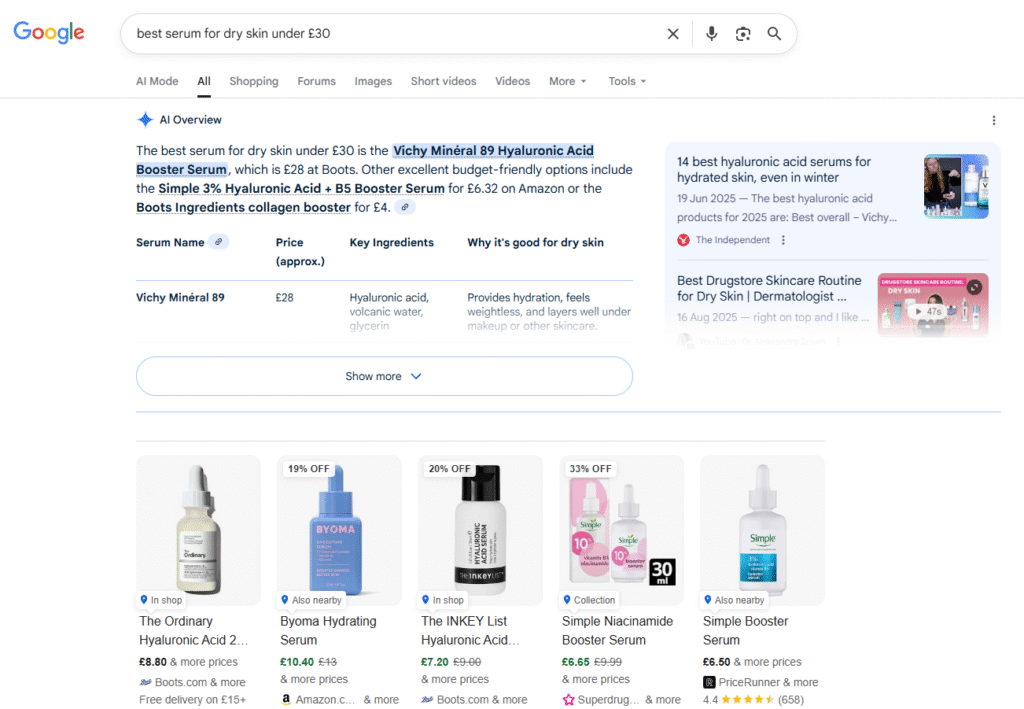
The days of optimising for keywords and search engines alone are over. It’s time to optimise for conversational, comparison-style searches (e.g., “best serum for dry skin under £30″) and ensure your product data is structured and up-to-date.
TikTok and reels are the new product search engines
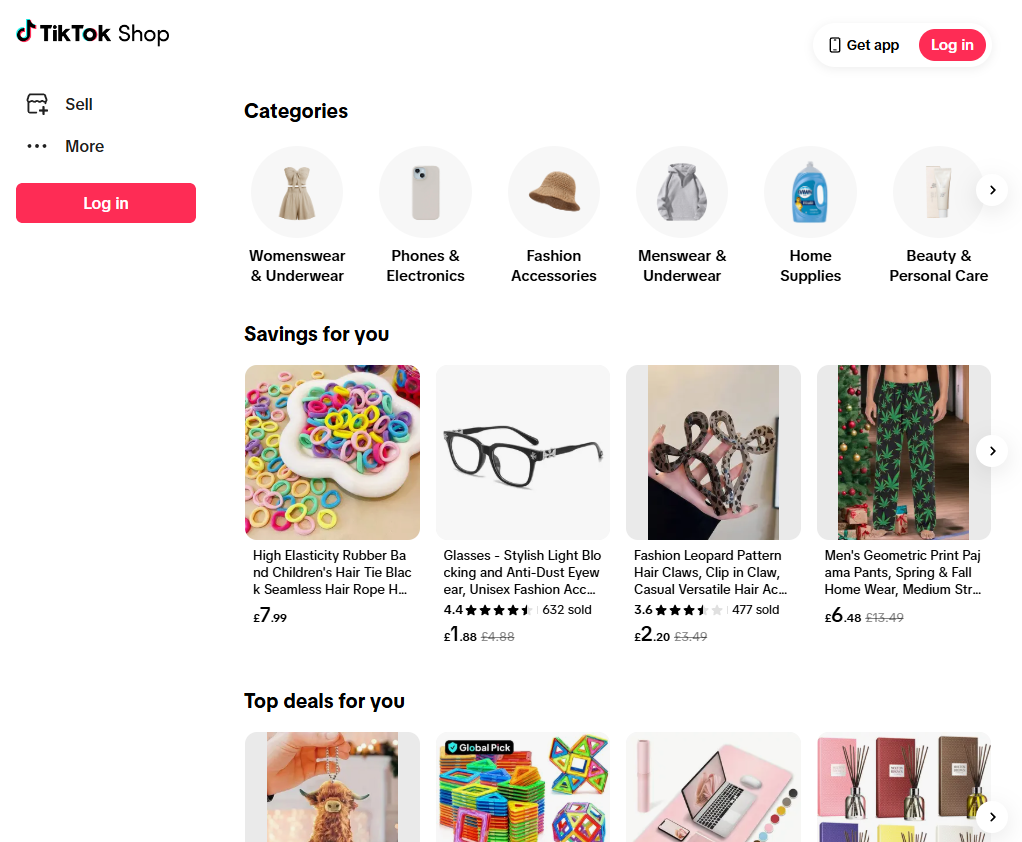
Social search has exploded. In 2025, Gen Z and younger Millennials start their shopping journey on TikTok or Instagram Reels more often than on Google. If you’re a regular TikTok user, you’re bound to have come across videos with the “commission paid” label or a product link in the bottom left-hand corner of the screen – TikTok is now a legitimate purchase funnel.
TikTok’s in-app search and affiliate links now function like a mini search engine, where creators, brands, and user-generated content drive product discovery. Short-form video SEO (captions, hashtags, keyword-rich voiceovers) matters just as much as meta titles used to.
TikTok’s AI now auto-transcribes audio for search indexing – try using TikTok’s search insights to find trending keywords, then optimise your video captions and spoken lines for those phrases.
Amazon and retail marketplaces are product search powerhouses
Amazon is the number one starting point for shoppers who are ready to buy. But competition is intense.
Here’s what we can learn from successful sellers in 2025:
- Using AI-assisted product listings that automatically A/B titles and images helps to improve conversion
- Making the most of retail media networks like Amazon Ads can help you dominate category SERPs
- Optimising for voice search, such as Alexa, Siri and Google Assistant integrates shopping functionality directly into results
Amazon is its own SEO ecosystem. Keyword optimisation, review generation and conversion rate optimisation are all important ranking factors.
Visual and voice search are mainstream
Consumers are now searching via cameras and microphones as often as keyboards and smartphones. Visual search through Google Lens, Pinterest Lens and Snapchat Scan drives billions of queries monthly.
Voice search has also been on the rise for several years at this point, and is now a key channel for product discovery in 2025. Voice search on mobile and smart home devices is powering local and routine purchases in particular, for example “order more oat milk” or “find black running shoes near me”.
For the best chance of appearing in visual search results, use high-quality, multi-angle product images with descriptive file names and alt text. For voice, optimise for natural language and question-based queries. These are all boxes you should be ticking on your ecommerce site anyway, and doing so will help to surface your products across multiple channels.
Retailer and brand websites are becoming discovery hubs
AI has enabled ecommerce brands to offer deeper levels of personalisation, transforming on-site search from a simple bar to a smart recommendation engine. Predictive search now suggests products before users even finish typing. Integrations with ChatGPT-style assistants help users to find products through conversation, for example, “show me gifts for skincare lovers under £50.”
Don’t just rely on external search. Make your on-site search intuitive, visual and conversational to capture interest before shoppers leave for Google or TikTok. For example, Shopify stores can use the Search & Discovery app to customise search, filtering and product recommendations to deliver the most relevant results for every search.
The rise of community commerce
Forums, Discord servers, Reddit threads, and niche Facebook Groups are now mini search engines themselves. As consumers become increasingly fatigued with influencers and paid product placements, they are now more trusting of peer reviews than influencer endorsements.
Reddit , Discord and Mumsnet are increasingly indexed by search engines and frequently appear in results, and are often referenced in AI summaries. And as you can see in the screenshot below, Google even has a dedicated section on the results pages for ‘discussions and forums’. Brands should monitor and engage in these micro-communities. Authentic participation can drive organic brand mentions that feed back into your SEO and credibility.

Conversational commerce – the future of product discovery?
AI and ChatGPT are becoming a part of our everyday lives, especially when it comes to online shopping. And with Shopify announcing an offical integration with Open AI, it’s safe to assume that conversational commerce is set to dominate product discovery.
Soon, consumers will be able to search for, compare and buy products without leaving ChatGPT. The AI-powered shopping assistant will present users with inventory directly from Shopify merchants to allow for immediate purchase, with no redirects or external links.
Conversational commerce is about to play a vital role in product discovery and could transform the way we shop in 2026 and beyond.
Need to rethink your ecommerce SEO strategy? Our SEO consultants combine technical expertise with in-depth audience insights to boost organic performance – send us a message to get started.
