
While Google’s E-E-A-T framework isn’t exactly new, recent core algorithm updates have made it an absolutely critical component for improving search rankings and organic visibility.
All four pillars of E-E-A-T are important and heavily influence how Google evaluates the quality and value of content. But in this blog post, we’re going to focus on expertise, exploring why it’s essential, how it fits within the broader E-E-A-T framework, and offer some actionable steps you can take to enhance Google’s perception of your site’s expertise.
Understanding the importance of expertise in E-E-A-T
Expertise, the second “E” in E-E-A-T, is fundamental to how Google assesses the value of your website’s content, particularly in highly competitive or sensitive industries like beauty, health, finance, and technology. But every brand across every industry can (and should) demonstrate expertise on the topics most relevant to their product offerings or services.
Here’s why expertise matters for SEO:
Content quality: Google’s algorithm is designed to prioritise content that demonstrates in-depth knowledge and understanding of the subject matter. Websites that publish generic, superficial content are less likely to rank highly compared to those that deliver comprehensive, well-researched material.
Safety/reliability: for brands operating within industries that can directly impact people’s lives, health, etc, such as healthcare, beauty, or personal finance, expertise is especially critical. Google’s algorithms closely scrutinise the credentials of the content creators and the accuracy of the information to ensure users receive safe and accurate advice.
User trust: expertise instills trust in your audience. When users recognise your brand as knowledgeable and reliable, they are more likely to return, engage, and convert. This not only enhances user experience but also reinforces positive ranking signals in Google’s algorithm. After all, if you aren’t an expert in your field, why should a consumer buy from you?
Expanding product and category ranges to broaden expertise
One way to expand your website’s expertise is by broadening the range of products or categories you offer. When a brand diversifies into new but related areas, it can establish itself as a more comprehensive expert in its industry.
Here’s how expanding product lines and categories can positively impact Google’s perception of your expertise and demonstrate E-E-A-T:
1. Showcase comprehensive knowledge in your industry
Expanding your product or category range can demonstrate to both users and Google that your brand has deep, broad knowledge of your field.
Broader expertise signals: offering multiple related categories shows that your brand understands different facets of your sector and can provide well-rounded guidance.
Cross-selling opportunities: a more diverse product offering gives you the ability to create cross-category content that demonstrates your expertise, such as how certain products complement each other or go together as part of a routine, outfit, etc.
2. Target long-tail keywords in new categories
By adding new products or categories, you have the opportunity to optimise for long-tail keywords that target specific user queries related to those areas. Long-tail keywords often signal that a user is looking for detailed or niche information. When your site covers these terms comprehensively, it’s an indication to Google that you are an expert on the subject.
For instance:
One of our sportswear clients, Avec, focused on supplying quality teamwear to professional footballs clubs when the business was founded in 1993. Over the years, Avec has expanded its product range, at first paying attention to grassroots teams and more recently branching out into women’s football kits, accessories, equipment and general workout wear and athleisure, which has been a huge fashion trend lately.
Branching into new product categories and markets has broadened the brand’s appeal, allowing SEO and content team to expand product ranges and collections and thus expand Google’s perception of Avec’s expertise. In turn, this strategy has opened up a new range of blog topics and content opportunities.
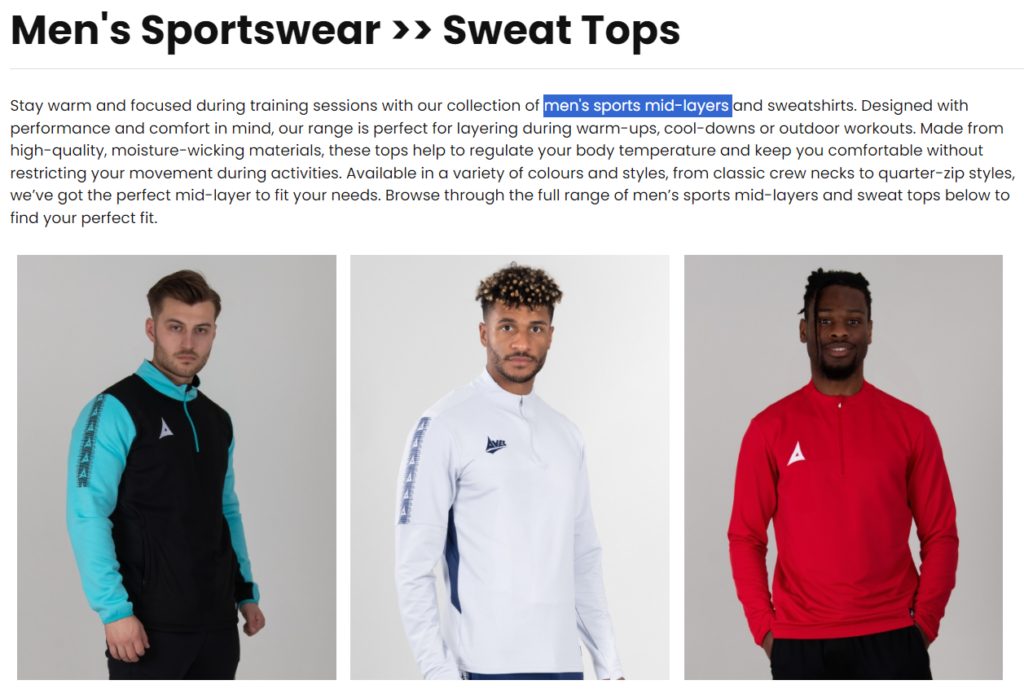
As demonstrated in the above example, we can see that the category page copy Avec’s Sweat Tops collection targets long-tail words such as “men’s sports mid-layers” as well as the more generic “sweat tops”.
The role of blog content in expanding expertise
While expanding product and category offerings helps demonstrate broader industry knowledge, blog content plays a crucial role in deepening and showcasing your expertise. Google relies heavily on informational content to assess whether a site has the knowledge and authority to cover a given topic comprehensively.
When expanding into new categories, creating detailed product guides, how-tos, and tutorials can further solidify your expertise. Educational content, such as skincare routine guides or makeup tutorials, enhances your brand’s authority and encourages Google to view your site as a go-to resource.
Here’s how blog content can boost your site’s expertise:
1. Answering specific user questions
Blog posts are an excellent way to address specific questions and pain points that your target audience may have. By writing comprehensive, well-researched articles that provide clear answers, you build a reputation for being an expert in the field.
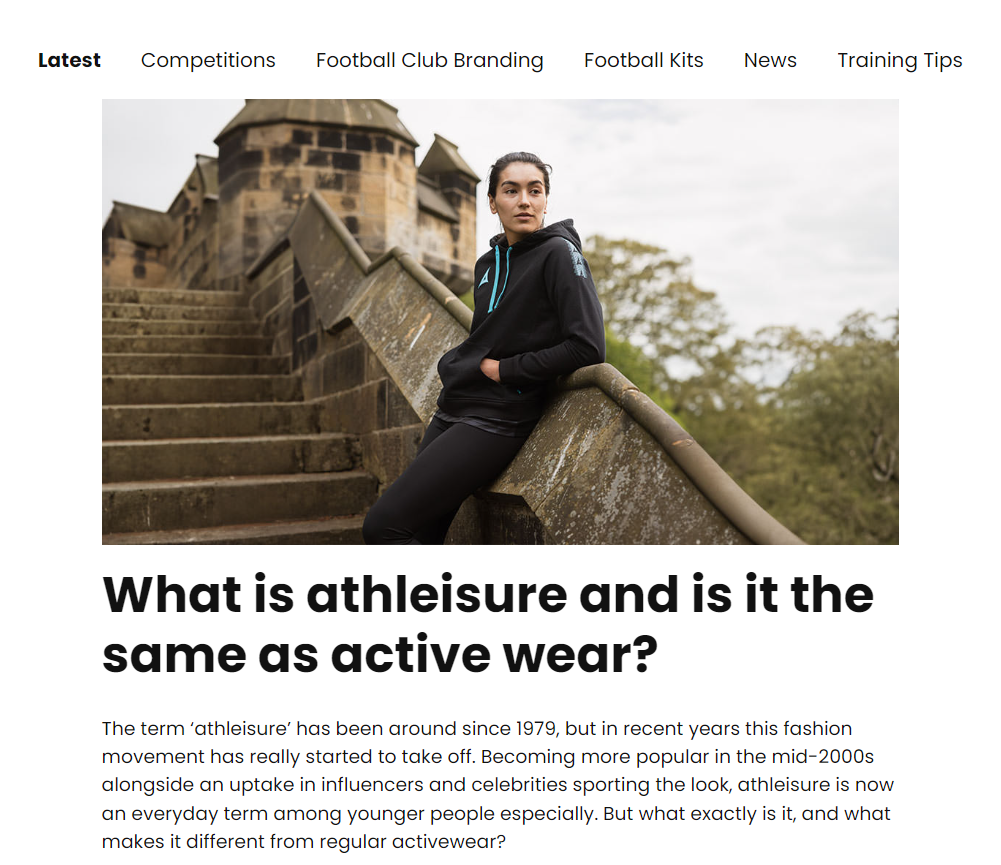
2. Exploring related topics and subtopics
Blogs allow you to cover a wide range of related subtopics that don’t necessarily fit within product pages. For example, we publish regular blog content for Avec Sport, allowing us to cover a multitude of subtopics that are valuable to the brand but don’t feel appropriate to include elsewhere on the site.
In the screenshot below, you can see that we’ve written an article on winter workout clothing, targeting seasonal terms and offering expertise on the best products for keeping warm when exercising in winter.
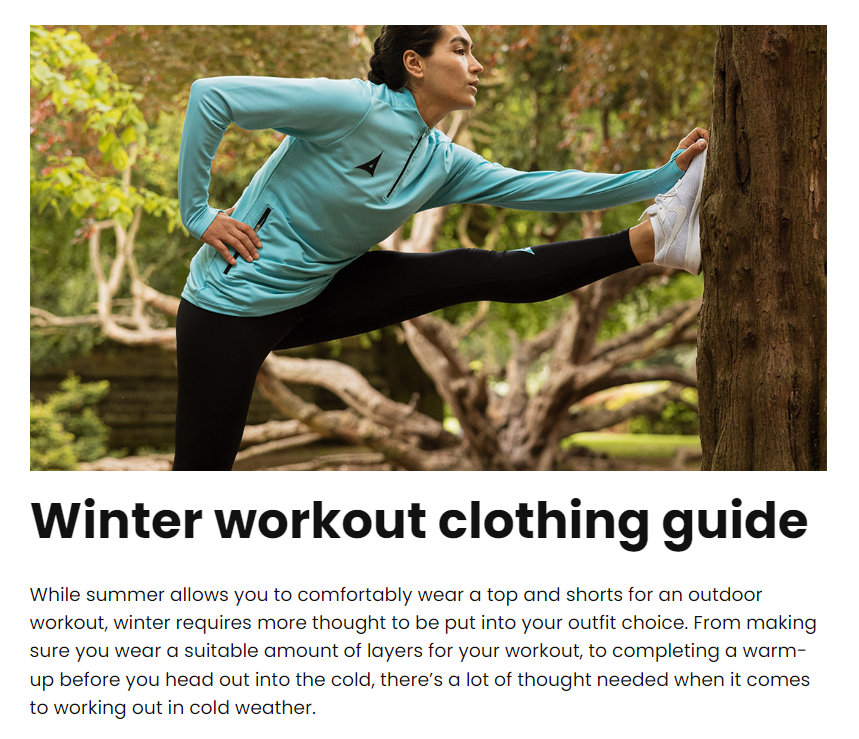
Displaying expertise in blogs can make ranking for keywords for related products on other areas of the site a lot easier. This type of blog not only attracts users seeking informational content but also helps Google better understand the breadth of your knowledge on the subject, enhancing your perceived expertise.
Due to Google’s recent Helpful content updates, content relevancy is a key ranking factor, so intent matching is more important than ever. Your blog can be used as a hub of useful content, allowing you to further solidify your expertise through detailed product guides, how-tos, and other types of educational articles.
3. Internal linking to showcase related expertise
Blog content also provides an excellent opportunity for internal linking, which can help reinforce your expertise across related categories.
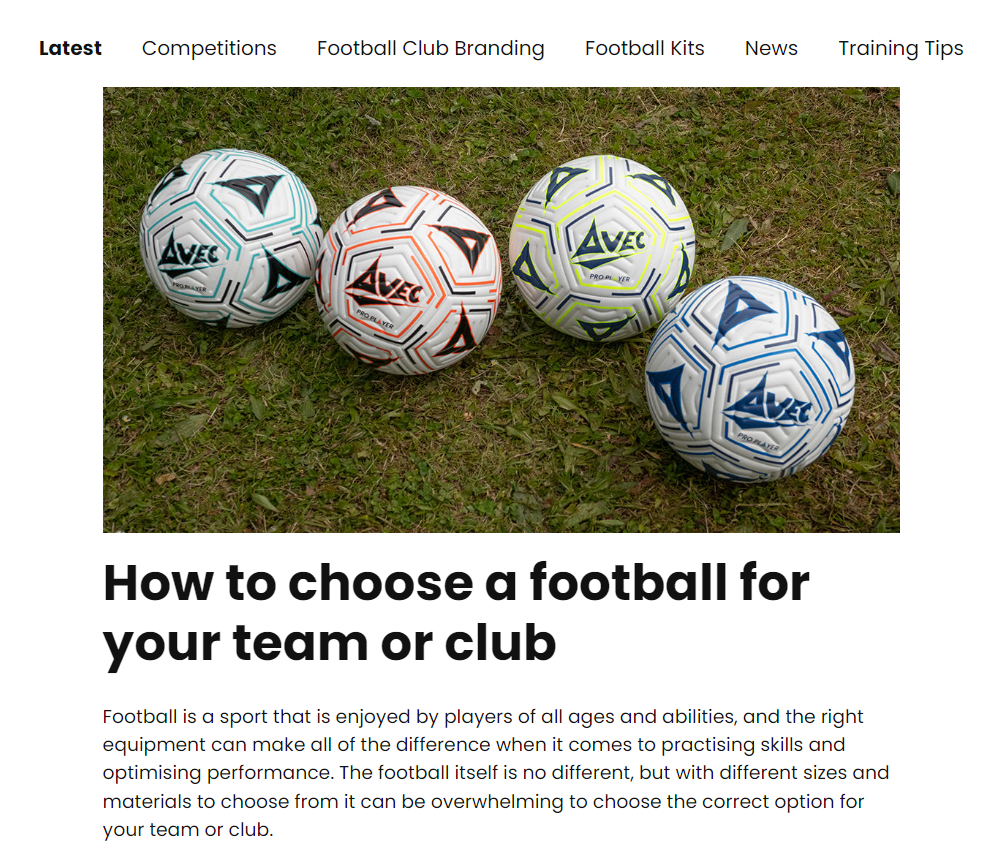
For instance, a blog post on “How to choose a football for your team or club” can internally link to product pages for various types of football, as well as other related articles about starting your own football team, building a comprehensive content network that signals expertise.
Proof that demonstrating E-E-A-T drives sales
Now for the results. Total organic revenue is up by 53% when compared to September last year. Looking at Avec Sport’s blog stats for September, we can see that blog sessions have increased by 125%, blog users have increased by 123%, and clicks have increased by 139% year-on-year. Proof that demonstrated expertise in your content and implementing the strategies discussed above really does lead to more conversions, better organic visibility and increased revenue.
Has your organic traffic been volatile over the past few months? Our team of SEO experts can help you devise a strategy that meets Google’s E-E-A-T and Helpful Content guidelines – book an appointment to get started.
