The global ecommerce market is expected to total $4.8 trillion in 2025. Now more than ever, you need to be sure you are running your ecommerce site to the highest standard possible. With so much competition, approximately 28 million active stores generating revenue globally and counting, you need to be sure you’re ahead of the game. We discuss the most common ecommerce marketing mistakes and how to avoid making them.
Poor audience segmentation
Let’s go back to the basics – audience segmentation is the process of dividing a market into sub-categorised groups based on their demographic and other shared characteristics. It’s a way of identifying unmet customer needs, in order to get ahead of your competition and provide solutions to these needs. The use of audience segmentation can help with a huge range of targeted marketing efforts, ensuring that the right message reaches the right consumer.
It’s important when segmenting audiences that you think outside the box and avoid stereotyping. Buyer persona research can be particularly important during the segmentation process, as you want to segment by very specific characteristics and not just generalise by gender, age, etc. Dividing by interests, needs, lifestyle, status and so on is key.
Many people can take the easy route and segment by the most generic characteristics, but putting time and effort into segmentation is the best way to drive results. Be sure that you don’t ‘over segment’ – having too many categories can create niches that often don’t come up and can become confusing for marketers to keep up with. Keep segmentation consistent, specific and clear.
Lack of personalisation
UK consumers report that they will spend 15% more with brands that personalise engagements. There are so many ways to personalise your website for visitors, from user-generated techniques and loyalty programmes to progressive personalisation based on real-time and historical data.
User-generated personalisation:
User-generated personalisation is determined by where a visitor navigates to on your site. During browsing, content such as ‘you might also like’ and ‘other visitors who viewed this product also viewed…’ becomes visible. The more a consumer is exposed to items that are suited to them, the longer they will browse and the more likely they will be to convert. Although this type of personalisation is important, it is the bare minimum and you should expand your efforts further to see results.
Progressive personalisation:
Progressive personalisation is based on data characteristics of visitors. Real-time data is collected through cookies and other variables as a visitor browses your site. It can also involve rules based on the segmentation process mentioned earlier. Pop-ups, messages and ads can then be tailored via location, gender, device type, traffic source and even weather conditions. Historical data is recorded from the journey a specific visitor took on your site in the past and can target messaging based on the number of previous orders, average basket and transaction value, total amount spent, cart abandonment and how often the visitor frequents your site.
With the advancement of AI, hyper-personalisation is becoming a lot easier to achieve than ever, and will only become more sophisticated as time goes on. While AI-powered automations like personalised product recommendations and dynamic pricing are commonplace, in time, they may not be enough. The future lies in systems that make autonomous decisions, adapt in real time, and even anticipate market changes.
Your website works for you, not for your customers
It can be a common mistake when designing a website to choose your own design preferences over those that would best suit your audience. The colour scheme, fonts and layouts should all be chosen with your target audience (and your brand identity) in mind and not just what looks good to you.
The way a website looks on first glance can make a huge difference as to whether a visitor will stay on your site, in fact, 55% of all visitors will leave a site after just 15 seconds. It needs to be easily navigable, tailored to your audience and demonstrate your brand appropriately.
And it’s not all about appearances, either. User experience will make or break your site, and have a serious impact on your sales – for better or worse. Your site needs a simple, intuitive navigation, simple checkout process and fast loading speed to ensure users aren’t put off.
There are several ways you can ensure that your website works best for your customer, research and create buyer personas, conduct a survey to gain feedback on your site, use a ratings system once a visitor has converted and follow up with customers via email.
Not adapting to social commerce
Ecommerce is always evolving, and these days, it’s not all about your website. Your social channels can also be powerful sales platforms, where you can convert your loyal followers into paying customers. Platforms like TikTok Shop, YouTube Shopping and Instagram Checkout are all great places to launch your social selling strategy.
To be able to sell on social channels, you first need to sync your catalog across platforms and test the available checkout options to ensure the most convenient process. Once you’ve got this set up, you can begin to create entertaining, shoppable content for your feeds. You should also consider partnering with influencers within your niche or trying a live shopping event to connect with your target customers.
Lacking unique content
This may not be an issue if you make your own product, however if you sell products created by another manufacturer, you shouldn’t just be regurgitating their product descriptions. It can be so tempting when the work seems to already be done for you to just copy and paste direct from the manufacturer site, but you risk getting lost in Google searches, or worse being removed from Google rankings entirely.
Be unique, describe the product in your own tone of voice and ensure it suits your brand. Use the description to explain why you stock this product and why you think it is great for your customers. Manufacturers can have a tendency to be technical and objective when describing a product and lack the ability to really sell it, so make sure you do!
Your product photos and videos need to be up to scratch as well. Again, it can be tempting to simply use the same brand-provided images that everyone else is using, and in some cases this may be fine. But always ensure that they are of high quality and aren’t damaging to your brand image.
It’s all about you
If the copy on your website is all about your business and how great you are and not what the benefits of choosing you are, it’s likely to turn consumers off. Avoid writing about why you and your product are amazing – yes this is important, you want customers to understand your brand values and the quality of your product, but it needs to be done in a way that solves their problems.
Brand values that consumers can relate to and want to be part of can help to drive conversions, so ensure that the content of your site is packed with information suited to your target audience. How can your product enhance the life of your customer? What can you do for them that your competition can’t?
Only showing positive reviews on your site
98% of consumers read online reviews before making a purchase, and customers tend to trust companies with a higher volume of reviews. So it’s important that the reviews you have displayed on your website are honest and fair. Ensure that you don’t eradicate the negative or indifferent reviews from view. Work to improve the service you provide and good reviews will become a sure thing, but consumers will respect your brand more knowing that you’re willing to be upfront and honest when things haven’t gone too well. A good way to prove your values is to always reply to negative reviews with an apology, a solution and sometimes an offer to make it up to the unsatisfied consumer.
Not having a call to action when an item is out of stock
If an item is currently out of stock on your website, make sure there is a call to action in place, again using personalisation, for example ‘we’re sorry but this product isn’t available right now. You might like this…” Another good call to action when an item is unavailable is to ask the visitor to leave their email address so you can notify them when it is back in stock. When notifying them, offer a small discount and they are likely to revisit and convert. Don’t let a customer walk away from your site empty-handed to purchase from elsewhere; be sure to have a solution in place.
Your design focuses on desktop first and you haven’t thought about mobile
Mobile has become so prevalent in the way we shop today, that consumers actually use their devices whilst in store to help them make informed purchases and find products more easily. In 2025, over 70% of ecommerce sales in the UK are made using a mobile device. If your website is only designed for desktop, you need to get up to date and optimise it to work efficiently across a range of platforms. Ensuring shoppers can have a seamless experience with your site, no matter the way they access it, will prevent them from going elsewhere.
Failing to measure
It may seem strange, but it is actually quite common for an ecommerce business to invest thousands into the creation of a website, and then sit back and relax, waiting for the sales to roll in without measuring successes and failures.
Measuring success isn’t all about how many sales or how much money you make in a day. It’s about understanding which marketing strategies are working to deliver results for your business and consistently repeating these techniques.
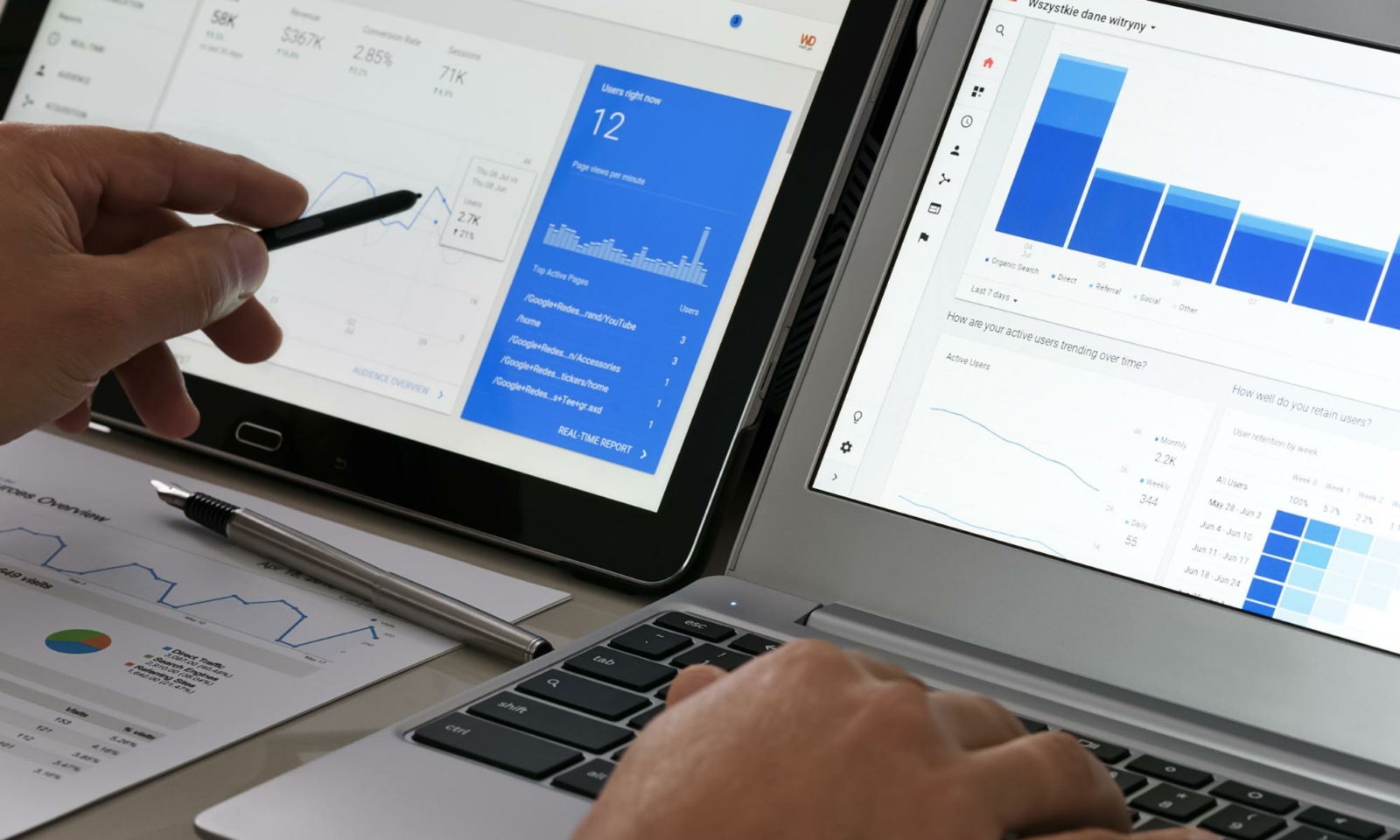
Using Google Analytics to track transaction and item data and determine the channels that are generating your sales can be helpful to see where your strategy is working efficiently and enable you to rethink the areas that are taking a dip.
Keep falling into these common traps and need help to get your marketing back on track? We can help with that – get in touch and we’ll review your current strategy.
