There’s a good chance you’re sick of hearing about AI, which is understandable! It’s everywhere. Often forced into places it doesn’t need to be, solving problems that didn’t exist in the first place. At a time when its use is seemingly becoming ubiquitous, we thought it was worth setting out how we approach it within design at Venture Stream.
First, let’s clear up what generative AI is and isn’t
Despite the name, generative artificial intelligence is not intelligent.
Generative AI predicts and generates output based on patterns and existing data. It does not understand context in the way a person does, and it does not form opinions or ideas. It produces responses that are statistically likely, often leaning towards what is safe, familiar, or agreeable – even if it’s plain wrong.
In practice, this means the output tends to sit in the middle ground. It reflects what already exists, rather than expressing anything distinctive or ownable. That may be useful in some contexts, but in creative work, particularly in building brands, it offers little value, where the goal is to define who you are, what you stand for, and what sets you apart.
AI is a tool
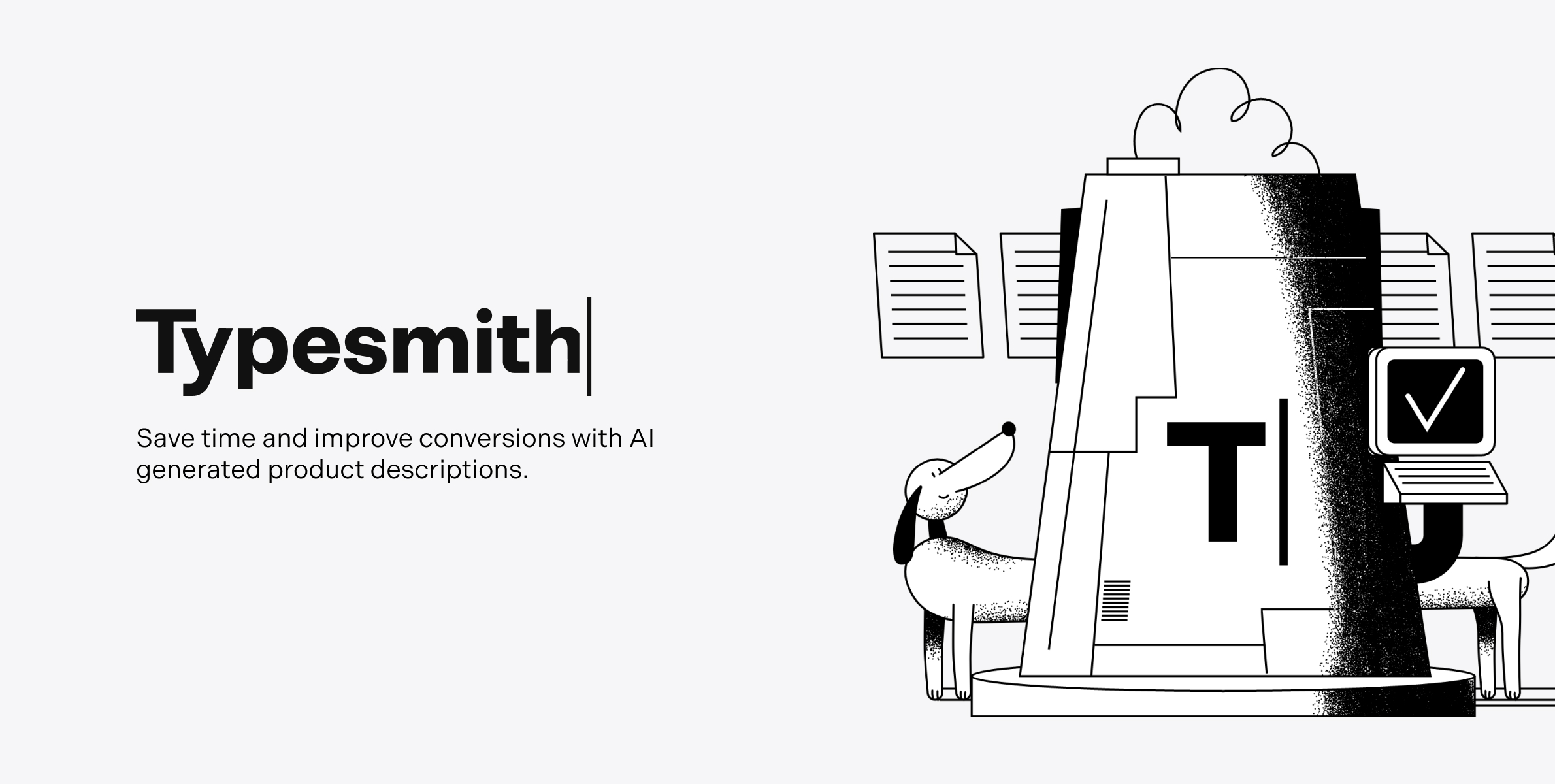
AI has a role. In our development team, for instance, we use it to create powerful tools that reduce repetitive tasks, streamline workflows, and improve efficiency. We also build customer-facing apps such as Typesmith, an AI-powered tool which generates high-quality product descriptions and other product data for use on popular ecommerce platforms like Shopify, and Magento.
In the design studio, its role is to support technical processes, not creative ones, helping to speed things up, organise information, or assist in production. It does not generate ideas, and it does not shape creative direction. Its place is in removing tedious tasks that stand in the way of us creating, not removing creativity that stands in the way of tedious tasks or, as Joanna Maciejewska put it, “I want AI to do my laundry and dishes so that I can do art and writing, not for AI to do my art and writing so that I can do my laundry and dishes”.
Creativity does not come from data
Design is not a mechanical process. It requires interpretation, judgement, and the ability to think abstractly. It involves making decisions that are not always obvious or predictable.
Generative AI is simply not able to do this, and by its very nature, won’t ever be able to. It combines existing information into something that appears new, but is ultimately derived from what has already been done.
If creativity is about pushing ideas forward, this presents a problem. AI does not lead; it follows.
A lot of AI-generated work looks convincing at first glance. It’s polished and often visually appealing, but over time, a pattern emerges, and it starts to become repetitive.
When it comes to brand, it’s worth separating repetition from consistency. Strong brands are built on consistency; clear principles, a defined voice, and a recognisable approach applied across every touchpoint. That does not mean producing the same output repeatedly. It means interpreting the same core ideas in ways that remain relevant, distinctive, and considered to craft familiarity among audiences.
AI outputs tend towards uniformity rather than consistency. Because they’re built from the same sources and shaped by the same patterns, the results converge. The work becomes interchangeable and lacking in clear distinction.
For brands, that’s a risk. Repetition does not strengthen identity; it makes it stale. Standing out requires clarity and the ability to evolve while staying true to the core idea and values.
Where we use it
That doesn’t mean we avoid AI entirely. It can be useful in the early stages of a project.
We may use it to:
- Explore directions quickly
- Generate rough visual reference
- Test variations
- Rapidly prototype interfaces or apps
These outputs are starting points, and they can help frame our ideas, but they certainly don’t define them or produce finished work.
The final output–whether that is design, typography, imagery, or production–is always done by a real designer. That’s where the decisions are made, detail is refined, and quality is ensured.
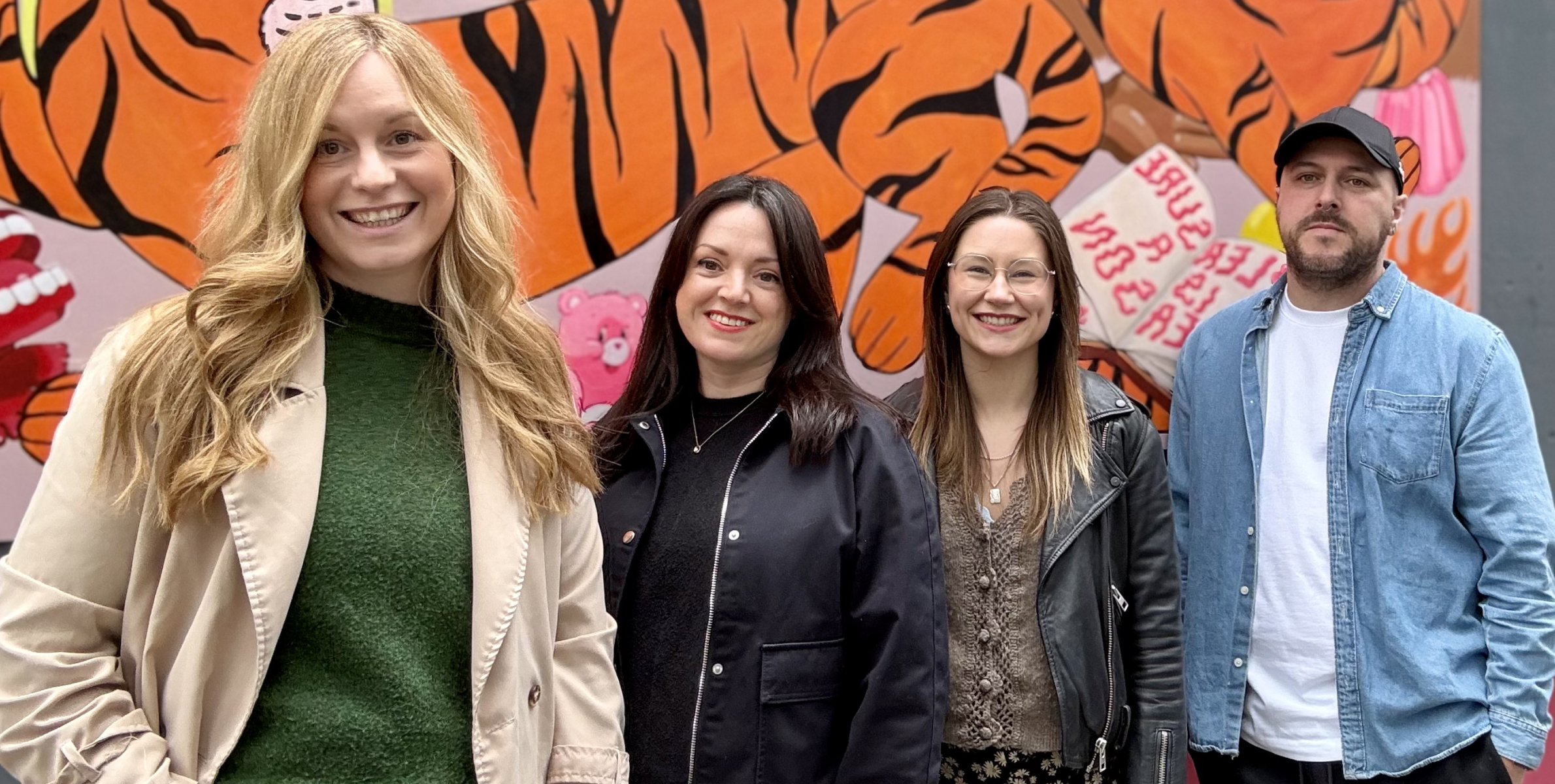
Protecting and valuing the craft
There is a craft to design. It’s built over time through experience, iteration, experimentation, and attention to detail. Treating it as a constant source of output, driven by speed and volume, undermines that.
If AI becomes the default approach, the work will become generic. It might be quicker, but it will also be less considered. Over time, that leads to inconsistency and a loss of identity.
More importantly, it removes the human element–the part that understands nuance, creates meaning, and connects with people.
Our position
We believe design is not defined by how much you produce, but by what you choose to create, and our approach reflects that. We use AI where it adds value, and avoid it where it doesn’t. It’s there to assist us in crafting the best solution to problems that our clients and their customers face.
Talk to our design team
AI is a powerful tool, but the best solutions aren’t generated – they’re crafted. Our team has been doing exactly that for decades, for businesses and organisations of all sizes, and in almost every sector. Talk to us and find out what real creative thinking could do for your brand.