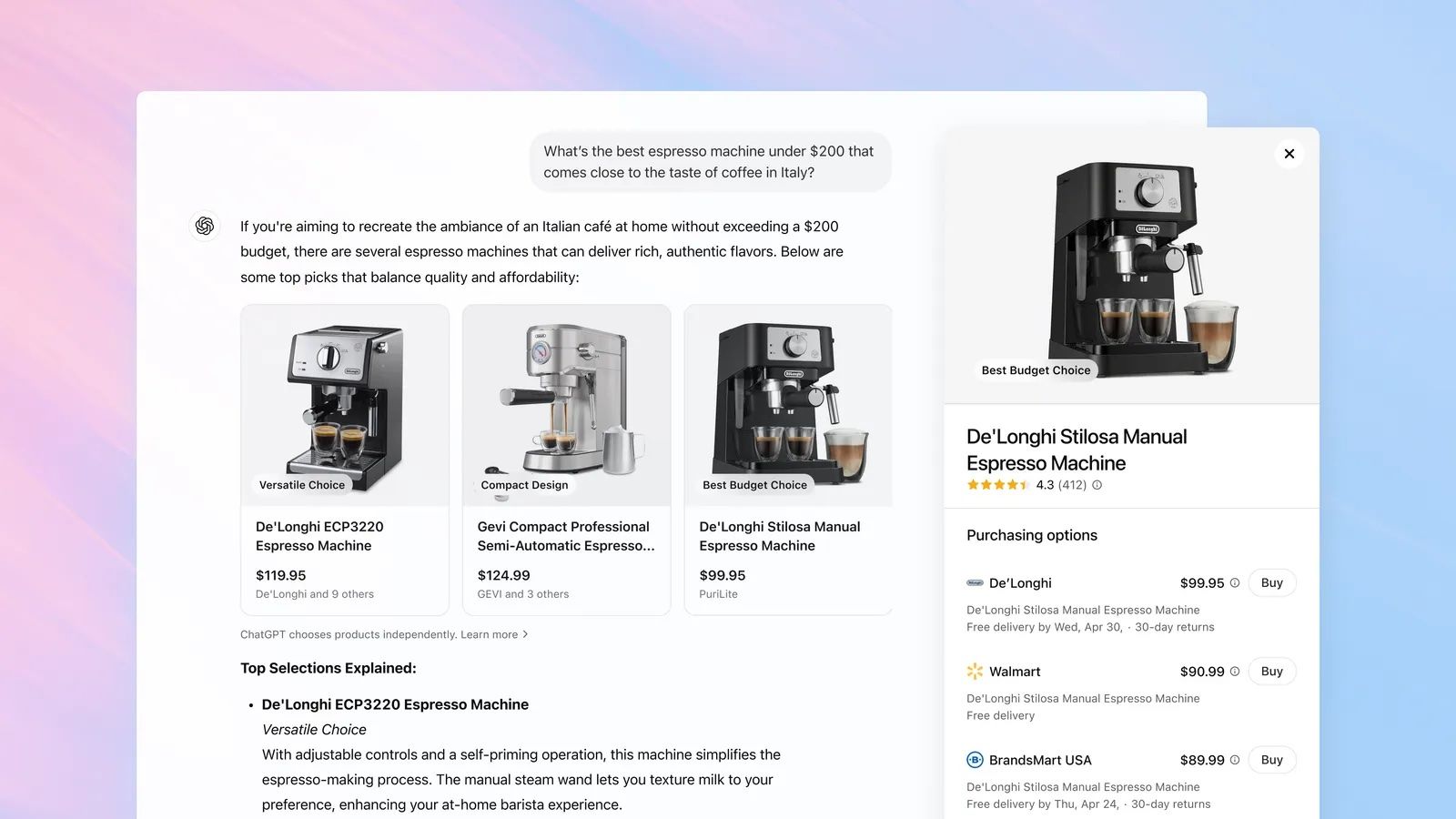
In April, OpenAI announced that a new shopping experience will soon be coming to ChatGPT. And in September, they made it official with an announcement that a Shopify integration was in the works.
This launch could mark the beginning of a new age in ecommerce, where AI-powered assistants become the go-to for consumers to discover, compare and buy products rather than search engines or social media platforms. Conversational commerce is on the rise, and could change the way your customers shop.
While we don’t currently have an exact date for the launch, Shopify merchants will need to prepare their online stores to ensure they don’t fall behind the competition. Here’s a comprehensive guide to optimise your Shopify store for ChatGPT Shopping.
What is ChatGPT Shopping?
ChatGPT Shopping is a feature within OpenAI’s ChatGPT that allows customers to ask product-related questions like:
“What are the best white trainers under £150?”
“Can you help me find a moisturising serum for sensitive skin?”
OpenAI’s assistant will then recommend products from a curated set of stores, potentially including yours. With ChatGPT Shopping already rolling out to Plus customers, it’s only a matter of time before it changes the way many consumers discover and buy products online.
What is conversational commerce?
Conversational commerce is the use of messaging apps, voice assistants, or AI chatbots to interact with customers and facilitate shopping experiences through natural, human-like conversations. Instead of browsing a website or app, people instead shop by talking, asking questions or requesting product comparisons. The AI-powered assistant will then provide personalised recommendations and real-time, chat-based help to find the most relevant products.
Shopify & ChatGPT Shopping: how will it work?
The first hint of an official partnership between Shopify and OpenAI came in April 2025 when code discovered in ChatGPT’s source was leaked.
The code snippet was uncovered inside the ChatGPT web app containing Shopify-specific terms such as “shopify_checkout_url”, “product_id”, and “offer_url”. The new code snippet also shows terms such as “buy_now”, prices, shipping, and product ratings.
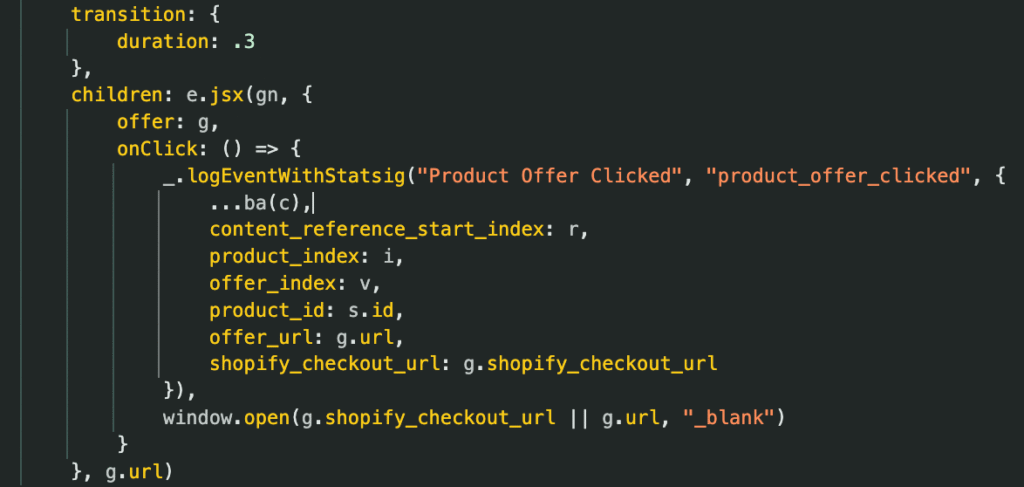
Now, Shopify and OpenAI have confirmed that the integration will be available, enabling purchases directly from ChatGPT AI platform into a personal shopping assistant capable of processing transactions within that chat. That’s right – no redirects to external stores. Shopify will “power product discovery with real-time data like pricing, inventory, images, and variants” so that ChatGPT queries can surface accurate and up-to-date product info. This implies Shopify merchants don’t need to manually push separate lists just for ChatGPT; their existing catalog upkeep will flow into the AI channel.
So, how could this look in practice? Imagine you’re using ChatGPT to find the best capsule coffee machine. Instead of receiving a list of external links, you’ll be presented with a range of options with prices, star ratings, and a “Buy Now” button. When you click on the button, you’ll be redirected to the Shopify checkout – all without leaving ChatGPT.
How to optimise your Shopify store for AI shopping
These days, it’s going to take more than just an appealing design aesthetic and nice imagery. The entire structure of your online store determines how easily machines like AI assistants can understand your website.
You may be feeling like you’re being given conflicting guidance. Over the past few years, we’ve been told to take a human-first approach to content to boost SEO visibility, but now we’re being told to write for machines. But AI discovery actually relies on natural, conversational and realistic language, so a lot of the points we’re going to discuss below are relevant to both SEO and AI optimisation.
1. Product data
When it comes to optimising product data for AI discovery, you really shouldn’t have to change your strategy too much if you’re already paying attention to quality and organic visibility. Large Language Models like ChatGPT require well-structured and descriptive information to understand your products and serve the most relevant results to users. Titles should be specific, while descriptions should use natural language. Avoid keyword stuffing or unnecessary jargon (as you should be anyway!) and include important attributes like size, colour, material and ideal usage cases.
2. Structured data and schema
You may already be using schema markup to inform search engines about certain pages on your website. If you aren’t, or you’re using it incorrectly, now is the time to correct that. Schema (also known as structured data) is a type of code that can be added to your website to help both search engines and AI tools better understand the content and context of your pages. It makes your products crawlable by AI engines, giving you a huge advantage.
For example, adding product schema to your ecommerce store’s product pages provides ChatGPT with information about the product in question, such as the item name, colour, price, product ratings and reviews, making it much easier for the LLM to determine whether your product is relevant to the user’s query. You should focus your attention on Product, Offer, Review, and Breadcrumb schema for best results.
If you need to audit your schema, you can use tools like Google’s Rich Results Test or Schema Markup Validator to make sure your markup is up to standard. These tools should flag any issues with accuracy or completeness, such as duplication or conflicting tags.
3. Collections & navigation
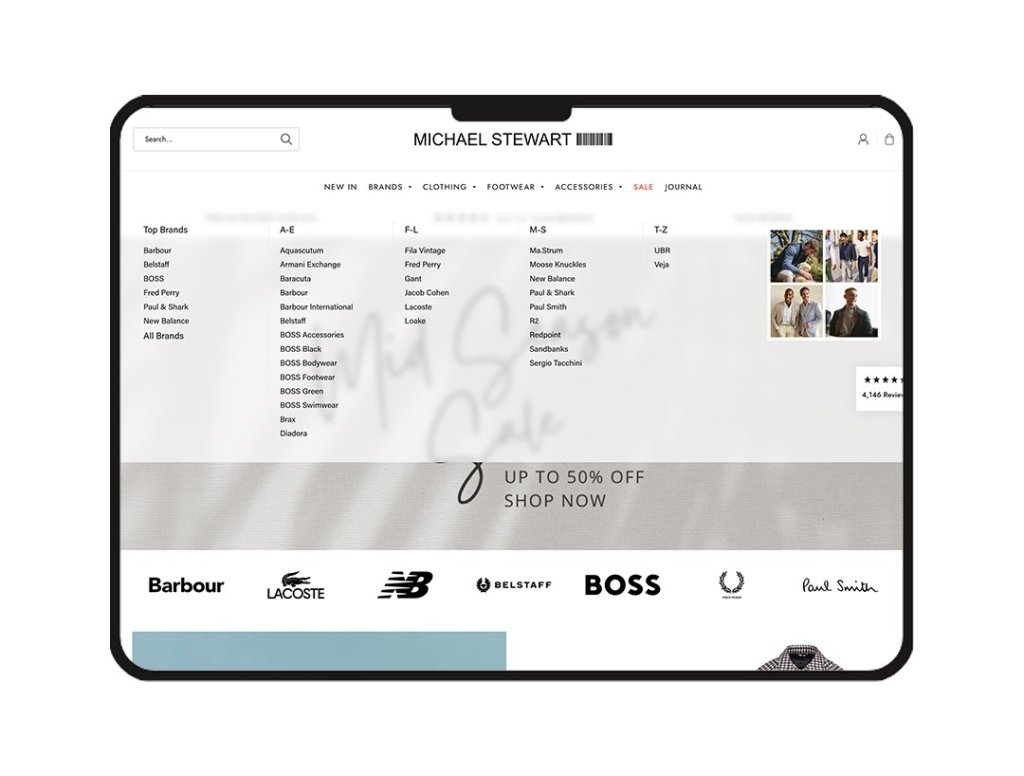
AI shopping tools may also link directly to a collection page. Your collections and website navigation need to be organised in a way that helps AI assistants understand, recommend and surface products in response to natural language questions. Your store’s collection structure doesn’t just help users find their way around your website, it also helps AI to understand product relationships. Think about collections in terms of intent and semantic relevance, and avoid grouping dissimilar products together to avoid confusion. When naming your collections, consider how people would naturally describe these products, for example, ‘Men’s Designer Bags’ rather than just ‘Accessories’.
For each collection, you’ll need a clear heading, descriptive on-page copy and schema markup to help AI understand the structure of your site and improve the relevance of results.
4. Search intent alignment
Search Intent Alignment means making sure your store’s content, product structure, and metadata match what shoppers are actually asking for – especially in natural, conversational ways.
ChatGPT doesn’t use traditional keyword search. It relies on natural language understanding, matching user queries to product data using AI. So if your store isn’t aligned with how people speak, you’ll miss out. You need to optimise your online store with this in mind. For example, if you sell backpacks, your target customer might ask ChatGPT in the following way: “What are some lightweight travel backpacks under £50?”
In order to stay ahead, you should conduct your own tests in ChatGPT, asking questions related to your products and industry. The answers you receive will give you a better understanding of how AI interprets intent and the type of content you need to create to match that intent. And remember that optimisation isn’t a one-off task, it’s something you’ll have to continuously work on as AI tools improve and evolve.
5. Site speed
While ChatGPT may prevent users from interacting with your site directly, user experience will still play a critical role in AI discovery. Your pages must load quickly and look great on all devices.
AI tools like ChatGPT may prioritise product links that lead to reliable, user-friendly pages. An intuitive checkout is especially important as many users (especially mobile users) may be coming directly from AI apps. Tools like Google PageSpeed Insights or Lighthouse can help you identify issues with site speed and boost technical performance.
6. Product reviews & UGC
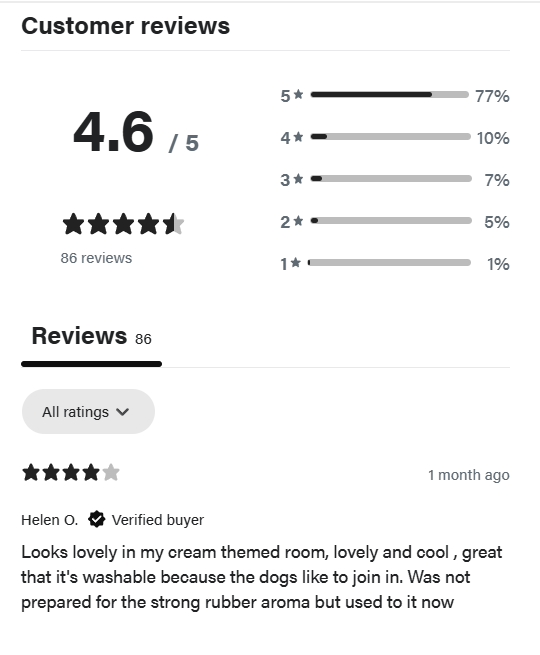
AI assistants can factor in ratings when recommending products. Product ratings and user-generated content will be a powerful tool for ecommerce brands in the age of AI discovery. Reviews provide social proof that helps AI to determine product quality and customer satisfaction.
Many ecommerce brands already use reviews to boost conversions. Shopify offers multiple apps that allow merchants to integrate popular review platforms such as Yotpo with their online store, while others enable customers to post reviews and star ratings directly within product pages. Reviews should be structured using schema (Review or AggregateRating markup), and you should ideally use review platforms that allow full visibility to search engines and AI crawlers.
Reviews and UGC will be especially helpful for queries that ask for the best-rated products, for example, “What are the best walking boots for comfort?” or “What are the most highly-rated laptops?”
7. Conversational content
Conversational content is the bridge between your product and an AI assistant recommending it to a customer. AI tools are trained on conversation – it’s not all about keywords. The more natural, clear, and helpful your content is, the easier it is for tools like ChatGPT Shopping to understand and recommend your products – and for real people to trust and buy from you.
Content written in a question-and-answer format is far more likely to match how users phrase queries to ChatGPT. It’s therefore a good idea to add FAQs to product pages, category pages any other relevant landing pages to help AI better understand your store and its products.
To make your website content more conversational, try writing in a tone and structure that mirrors how people actually speak and ask questions. Use natural, human-centric language rather than overly formal language that doesn’t resonate with real people. Speak directly to your customer, using “you” and “your” to build a connection and make your copy sound more personal.
8. Product feed
Although direct product syncing isn’t fully live yet, ChatGPT Shopping will likely use product feeds as a way to pull and understand product data. You’ll need a high-quality, clean and well-structured feed – similar to what you’d use for Google Shopping.
Audit the product data you send to tools like Google Merchant Center, Klaviyo product feeds or your Shopify JSON endpoints. You can use apps like Google Channel, Feedonomics or ShoppingFeeder to export your feed. Ensure all products are listed in Shopify with complete and optimised metadata, prices and availability. Make sure all product attributes are in place and avoid vague titles.
9. SEO foundations
We know that AI discovery differs from traditional organic search, but that doesn’t mean you should abandon your SEO strategy. Many core SEO principles will contribute to visibility within AI shopping tools. Signals of trust, authority and content quality will still be vital.
That means that crafting detailed, high-quality content around specific topics relevant to your niche will not only boost your Google rankings but also influence how AI perceives your brand. The more you build a consistent and authoritative presence online, the more likely it is that ChatGPT will view your store as a reliable and relevant source.
By investing time in your online store’s SEO and content strategy, you’re essentially killing two birds with one stone, as you’ll boost visibility across multiple platforms at once.
The future of ecommerce?
AI shopping is here, and the way we discover, purchase and interact with ecommerce brands is evolving. AI technology is becoming a part of our everyday lives in many ways, so it’s no surpise that we’re seeing a shift in the way we shop. For Shopify brands, an integration with ChatGPT is good news, as stores built on this platform may find that they have a competitive edge and a higher chance of being recommended by AI discovery models.
If you want some help and guidance on preparing for conversational commerce, or the news has made you consider a platform migration, our ecommerce consultants can help. Get in touch and we’ll let you know what you need to do.
