When you’re running an online store, traffic equals revenue. But not just any traffic – the kind that converts. And that starts with being found.
In this guide, we’ll break down everything you need to know to make your ecommerce store more discoverable, competitive, and profitable through SEO, running through the key aspects of your online store that need to be optimised for organic search.
What is ecommerce SEO?
Ecommerce SEO is the process of optimising your online store to increase visibility in search engine results pages (SERPs). Unlike traditional websites, ecommerce sites have hundreds or even thousands of product and category pages, each requiring careful optimisation.
The goal? Drive organic traffic that converts into paying customers. But the tasks involved in achieving this are varied, from creating website content to technical maintenance.
Why SEO matters for ecommerce sites
68% of online experiences begin with a search engine. The aim of ecommerce SEO is to get your product pages to appear among the top organic search results (below paid and Google Shopping ads) on the first page of Google. This is because websites that don’t appear in the top ten results receive far fewer visits, resulting in less traffic and sales for your online store. If your store isn’t ranking, you’re losing customers to competitors who are. Backlinko reports that the first result on Google gets 27.6% of all clicks, further proving that SEO really matters.
Plus, SEO is free and scalable, unlike paid ad campaigns which only go as far as your budget allows.
Ecommerce SEO strategy: how to optimise your online store
Creating an SEO strategy from scratch can seem overwhelming, but if you stick to the following six steps you can set up good, basic SEO on your website.
Ecommerce SEO steps:
1. Keyword research
2. Site architecture
3. Technical SEO
4. On-page SEO
5. Blogging
6. Link building
Ecommerce keyword research
The first step in any SEO strategy is to perform keyword research, and ecommerce SEO is no exception. However, ecommerce keyword research differs slightly from traditional keyword research. The majority of websites only care about informational keywords, but ecommerce brands need to target a mix of informational and commercial terms.
The purpose of keyword research is to identify high-value terms that your target customers are searching for. When it comes to informational keywords, searchers are looking for answers, guides and explanations, such as “how to choose an eco-friendly yoga mat.” Shopify stores or other ecommerce websites can (and should) target these keywords through blogs and landing pages, but also need to target keywords that display buying intent, for example “eco yoga mats.”
You’ll therefore need to gather keyword research for both long-form, highly specific search terms as well as more generic, product-focused keywords when building your ecommerce SEO strategy.
How to perform keyword research
There are multiple tools you can use to perform keyword research, the most popular being Ahrefs and SEMrush. These tools will tell you the monthly search volume, intent and ranking difficulty of each keyword related to your product or category, which you can use to build a keyword strategy for your website.
When it comes to long-tail keywords, you can also look to Google’s ‘People also ask’ section (about halfway down the search engine results page) to discover commonly searched questions surrounding your products. You can then use these to form FAQ pages or blog posts, which may help you to win more prominent positions in the SERPs.
Ecommerce site architecture
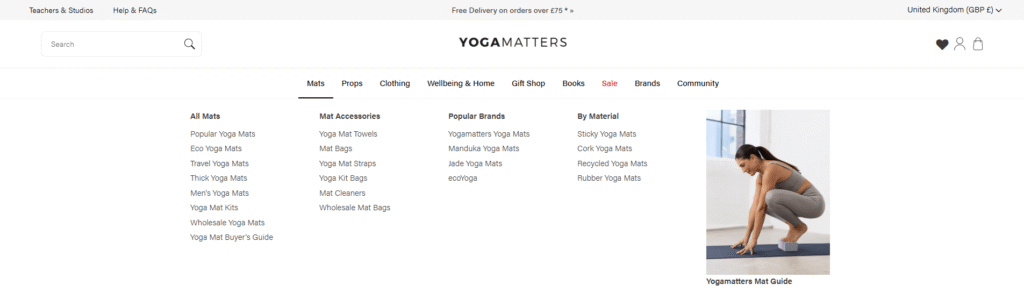
When it comes to ecommerce SEO, it’s not just about the content within your pages, but how you structure them, too. How the pages on your online store are organised affects your search rankings and visibility, and impacts the user experience of your site. The easier visitors and search engine bots can navigate the content on your site, the better it will perform in the SERPs.
For ecommerce sites with hundreds of products and categories, site structure can get pretty complicated. Before you start developing your website, you should stick to the following two rules:
1. From the homepage, users should be able to reach any product in 3 clicks or less. The more clicks away from your homepage a product page is, the less authority it has.
2. Your site structure should be straightforward and designed to scale seamlessly as your store grows.
You shouldn’t be in a position where you have to reorganise or rearrange your site structure every time you add a new product, collection or category. This will only lead to time-consuming, manual work on your end and a poor user experience for your potential customers.
Technical SEO
Your backend set up matters. If your site is built on a poor foundation, all of your hard work writing content, performing keyword research, uploading products, etc, will be in vain. Technical SEO work ensures that your website is optimised for crawlers, has optimal side speed and is fully functional on all devices. This leads to better website engagement and increased organic traffic, as your site will be fast and easy to use. There are dedicated technical SEO tools you can use to conduct regular crawls and audits on your site, which will identity any technical issues such as slow loading speeds, missing title tags and broken links.
On-page SEO
When you’ve got your keyword research and site architecture ready, it’s time to start optimising the two of the most important page types on any ecommerce website: product category pages and product display pages. Let’s run through the basics of ecommerce content optimisation.
Product descriptions
As with any other web page, search engines use the content on your product pages to determine with keywords they should rank for and how highly they appear in the results. This is why product descriptions are so important, but shockingly, they are often neglected in favour of duplicated content (copy and pasted directly from a supplier or manufacturer).
To improve the rankability of your product pages, write unique and detailed descriptions that explain all of the benefits and features of your products. Try to naturally weave in relevant keywords to help Google understand what your content refers to. You can also use a series of bullet points to summarise key details such as dimensions, colourways or fabric composition. Not only will all of this extra info help you rank for more accurate keywords, it may also convince your customers to buy.
Title tags, meta tags and meta descriptions
Title tags, meta tags and meta descriptions should be optimised to include primary keywords. Stick within Google’s recommended character limits and consider adding any special offers such as free shipping to boost click rates.
Product images and videos
Add alt text to all product images, accurately describing what the image contains. File names should be descriptive and keyword rich.
Blogging
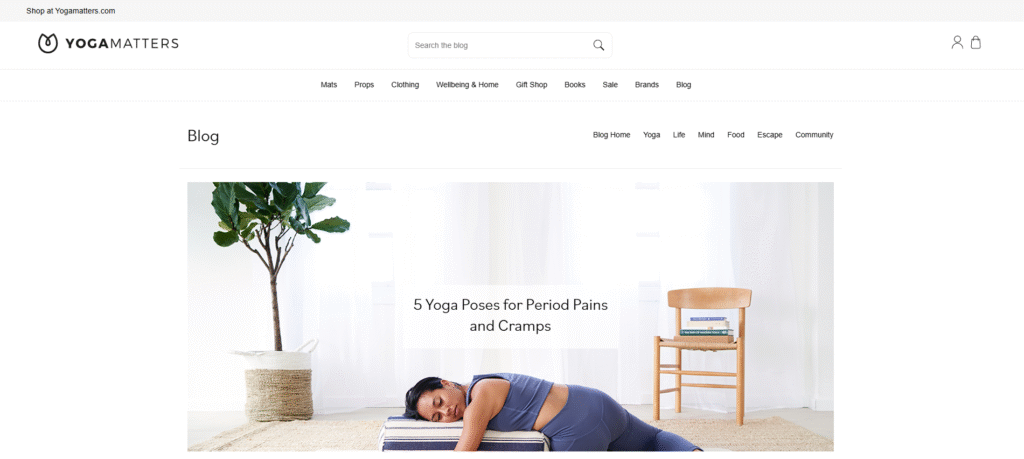
Blogging can help to significantly boost your website’s visibility, and should form a key part of your ecommerce SEO strategy. In the age of E-E-A-T, long-form content allows you to flex your experience and expertise within your dedicated sector or niche, positioning your website as a credible and reliable source, which in turn helps customers make informed buying decisions.
Blog content is vital during the research phase of the buying journey. By writing about specific product use cases, how-to guides, relevant industry trends or detailed product comparisons, you can showcase the benefits of your products while offering valuable guidance to your target customers.
In terms of SEO, blogs are the perfect opportunity to rank for highly-specific, long-form keywords, such as commonly Googled questions or problems for which you can provide solutions.
Link building
The number, quality and relevancy of a page’s links is used by Google to determine trustworthiness and authority. Building quality backlinks can help to increase the rankability of your website.
But this doesn’t mean that any old backlinks will do. Focus on respected, well-ranking websites within your niche. Here are a few ways you can build quality backlinks:
- Partner with respected influencers, public figures or bloggers on product reviews or comparisons
- Get featured in product round ups or gift guides
- Guest posts/thought leadership articles on industry-relevant sites
SEO never stops – but having an experienced ecommerce agency on hand can make life a lot easier. Get in touch to see if we’d be a good fit for your business.
