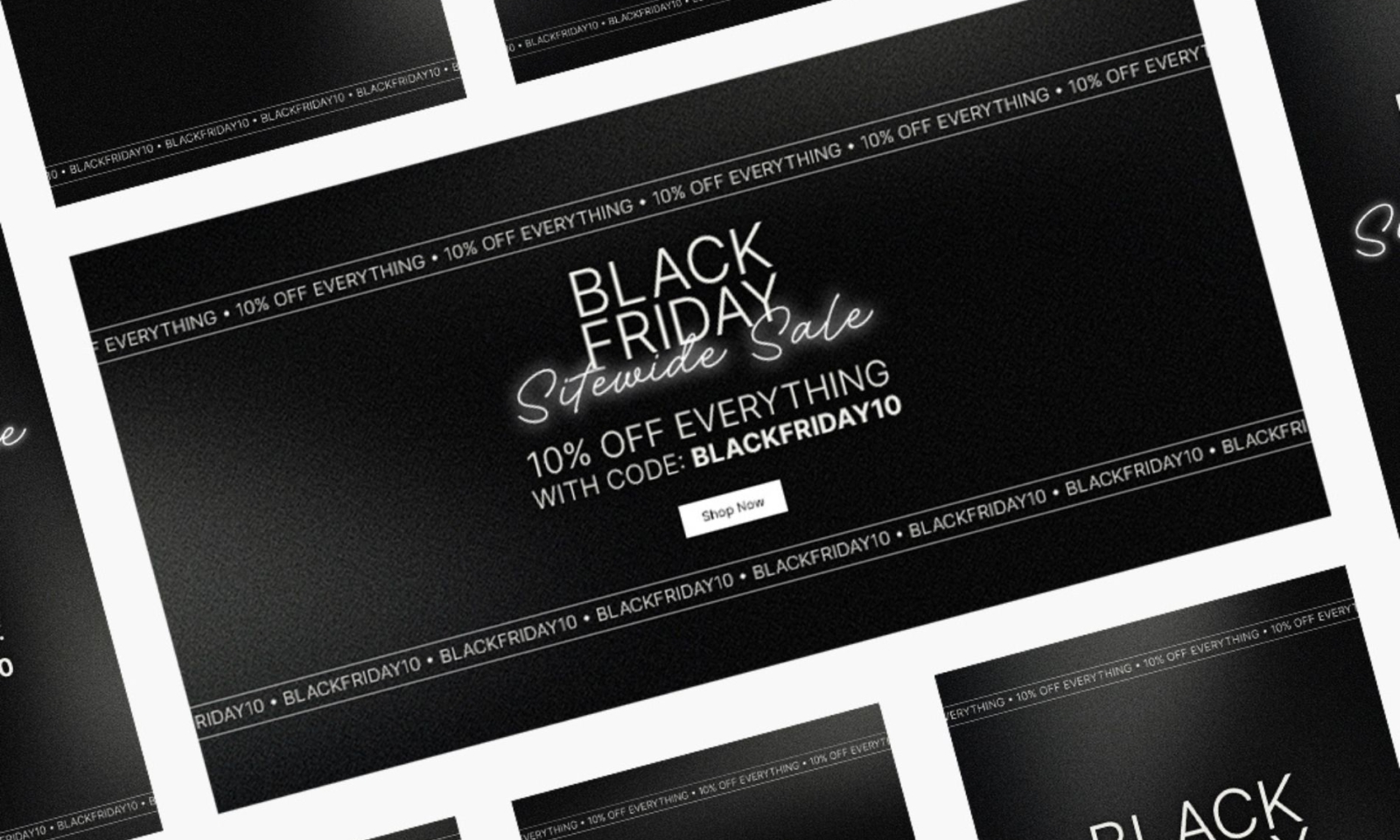
The biggest day in retail is almost here.
Black Friday marks the unofficial start Christmas shopping season. In more recent years, the rise of ecommerce has transformed the way consumers shop during this time, with online sales consistently outpacing brick-and-mortar purchases.
As we approach Cyber Weekend, we’re dusting off our crystal balls and exploring our top trend predictions for Black Friday 2024.
Black Friday ecommerce trends
Ecommerce sales will hit record levels
With ecommerce sales set to grow by 30% by the end of this year, we expect online sales to outperform in-store sales this Cyber Weekend. While consumer preference has been shifting towards online shopping for years now, various factors make shopping online preferable on Black Friday specifically, such as better discounts, more convenience and crowded stores. That doesn’t mean that the in-store experience doesn’t have its place, however. Hybrid shopping, where a purchase can be made online and collected in-store, may prove popular if it saves consumers money on shipping fees.
Buy now, pay later options will be in demand
In an uncertain economic climate, flexible payment options are increasingly popular. BNPL services like Klarna, Afterpay, and PayPal Pay in 4 will be essential tools for high-ticket purchases, and for new customer acquisition. Retailers offering these payment gateways will likely outperform those who don’t.
AI will drive deeper levels of personalisation
Personalisation is king in ecommerce, and Black Friday 2024 will be no exception. Shoppers are looking for tailored recommendations, exclusive offers, and curated shopping experiences. Now that AI is a part of our everyday lives, ecommerce websites will use AI and machine learning algorithms to analyse customer data and serve up personalised product suggestions, creating a more engaging and relevant shopping journey, boosting conversion rates.
We can expect to see AI being used to achieve the following:
Dynamic pricing: retailers will use AI to offer real-time discounts based on inventory, demand, and customer profiles.
Smarter product recommendations: enhanced algorithms will drive upselling and cross-selling during the shopping frenzy.
Customer service: AI-powered chatbots and virtual assistants will help customers navigate deals more efficiently and find the products they’re looking for, potentially driving higher conversion rates.
Mobile shopping will dominate
At this point, if you’re not optimising your website for mobile devices, you’re losing out on sales. Black Friday sales are no exception. In fact, research conducted by Salesfire revealed that mobile devices accounted for 70% of all sales and 63% of all revenue on Black Friday 2023.
Retailers must ensure their websites are fully responsive on mobile devices to accommodate the growing number of consumers who prefer shopping on their smartphones and tablets. Additionally, offering mobile-exclusive promotions and seamless mobile payment options will be crucial for success. For retailers who offer their own app, app-only offers may help to accelerate downloads over Cyber Weekend.
Sustainable shopping will remain a priority
Sustainability is a driving force in consumer behaviour, and shoppers are increasingly seeking eco-friendly and ethically sourced products. In 2024, ecommerce businesses that embrace sustainability in their supply chains and product offerings will gain a competitive edge. Expect to see more retailers highlighting their environmentally friendly practices and offering discounts on sustainable products during Black Friday.
More focus on sustainability may also see a shift towards resale platforms this year. Many consumers are gravitating towards resold goods not only because they want to be more sustainable, but to save money and get their hands on products faster. Budget-conscious will also shoppers will also turn to resale platforms for value, influenced heavily by the cost of living crisis and a shift towards buying luxury goods secondhand.
Social commerce will be bigger than ever
Social media platforms have become powerful tools for ecommerce, and this trend has only intensified with the rise of TikTok. From viral video trends to clickable carousel posts, brands will use social commerce to reach audiences both organically and through paid campaigns.
More products may be purchased through TikTok Shop or even TikTok Live. Luxe Collective made headlines recently when they sold two Chanel bags worth over £12,000 via a live shopping stream. This demonstrates a clear shift in consumer behaviour towards social shopping – even for high-ticket, luxury products.

Enhanced shipping and fulfilment options will be expected
Consumers have come to expect fast and reliable shipping, and ecommerce businesses will need to step up their game in 2024. Offering multiple shipping options, including same-day or next-day delivery, will be essential to meet customer needs. Retailers should who have invested in efficient order fulfilment processes and transparent tracking will provide a superior shopping experience to those that only offer standard shipping options. Consumers will also expect discounted or free shipping for higher order values.
There’ll be a strong focus on local and small businesses
With a growing “support local” movement, consumers are making conscious efforts to shop from small and independent businesses. These businesses will capitalise on Black Friday with exclusive, limited-edition products and community-centric marketing. Expect to see personal touches like hand-written notes or behind-the-scenes stories on their social feeds.
Want to ensure you always stay ahead of the curve? We’d love to chat about your brand’s ecommerce strategy – send us a message and we’ll be in touch.
